Religious buildings
Corinaldo’s churches span fifteen centuries of history: from the early Christian apse of the Madonna del Piano church to the sanctuaries that draw pilgrims from all over the world every year. Art, architecture and devotion come together in every building, from the historic centre out into the countryside.
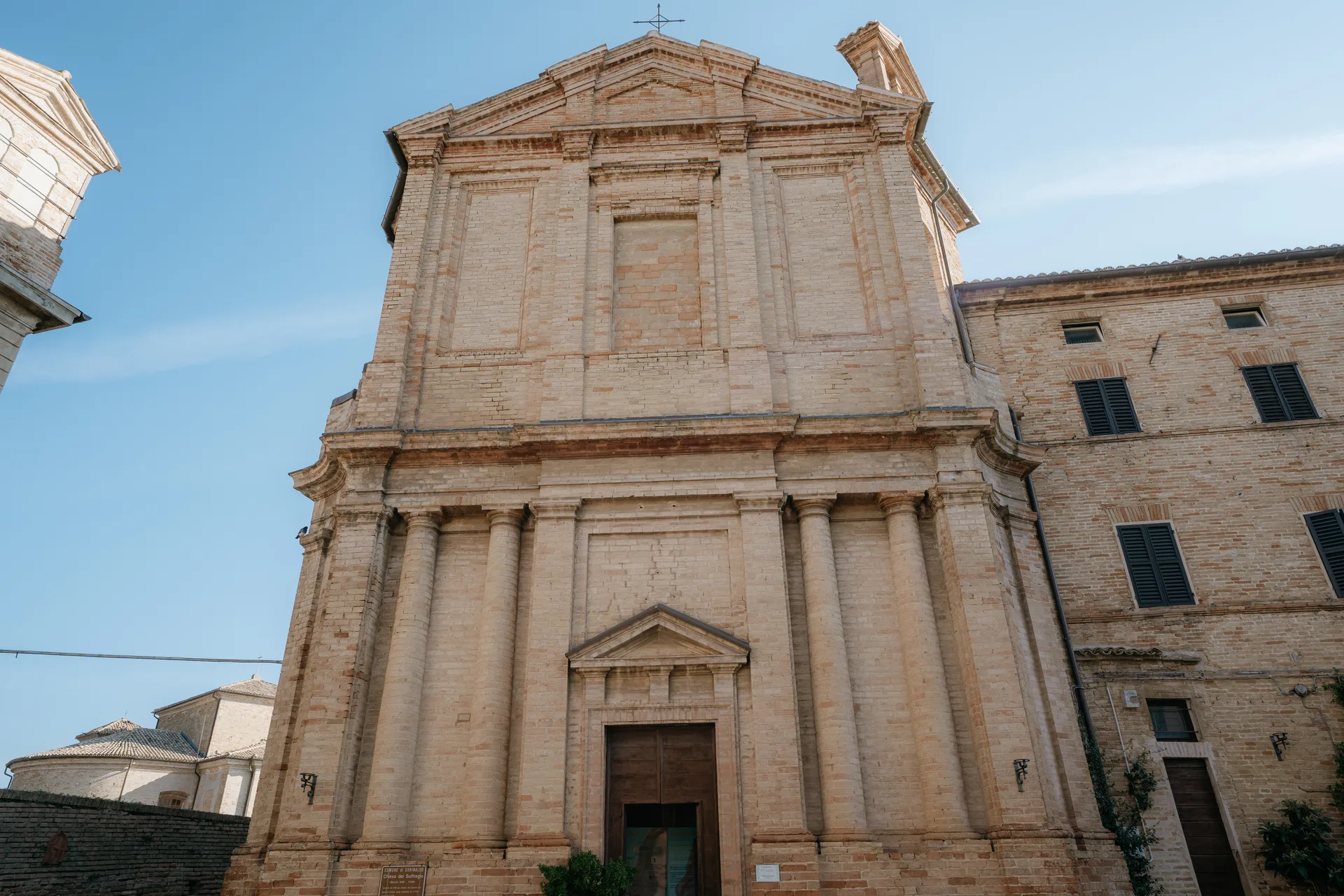
Church of Suffragio
The Church of Suffragio, founded by the brotherhood of the same name, was built at the behest of Captain Pier Agostino Orlandi, who donated part of his own demolished house for this purpose.
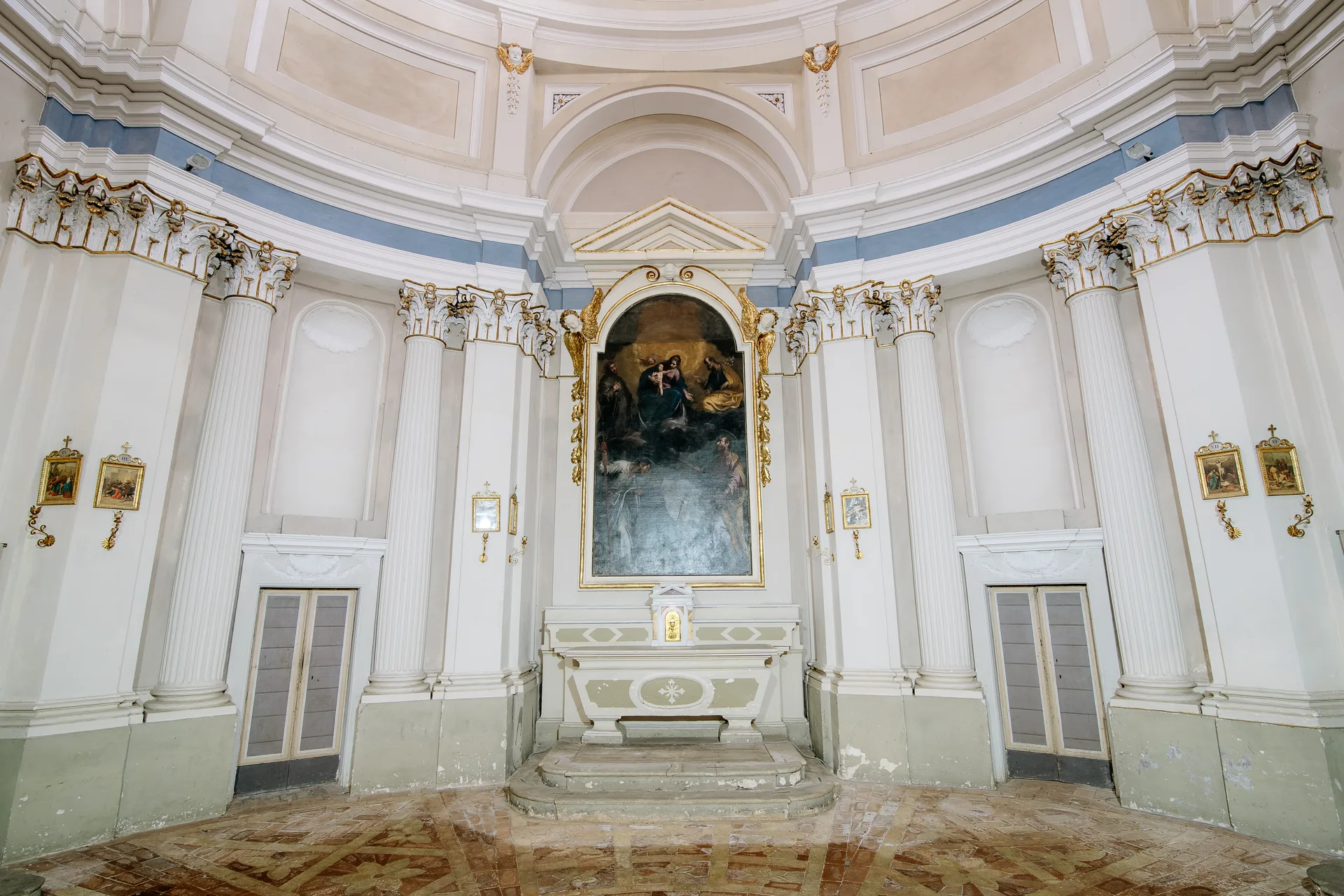
onstruction was completed at the end of 1640, and on January 6 of the following year, it was solemnly consecrated by Father Luigi Brunori. The day before, a painting depicting the Virgin and Child with Saints Joseph, Francis, Thomas the Apostle, Nicholas, and Andrew the Apostle—a work by the painter Claudio Ridolfi—was placed on the church’s high altar.
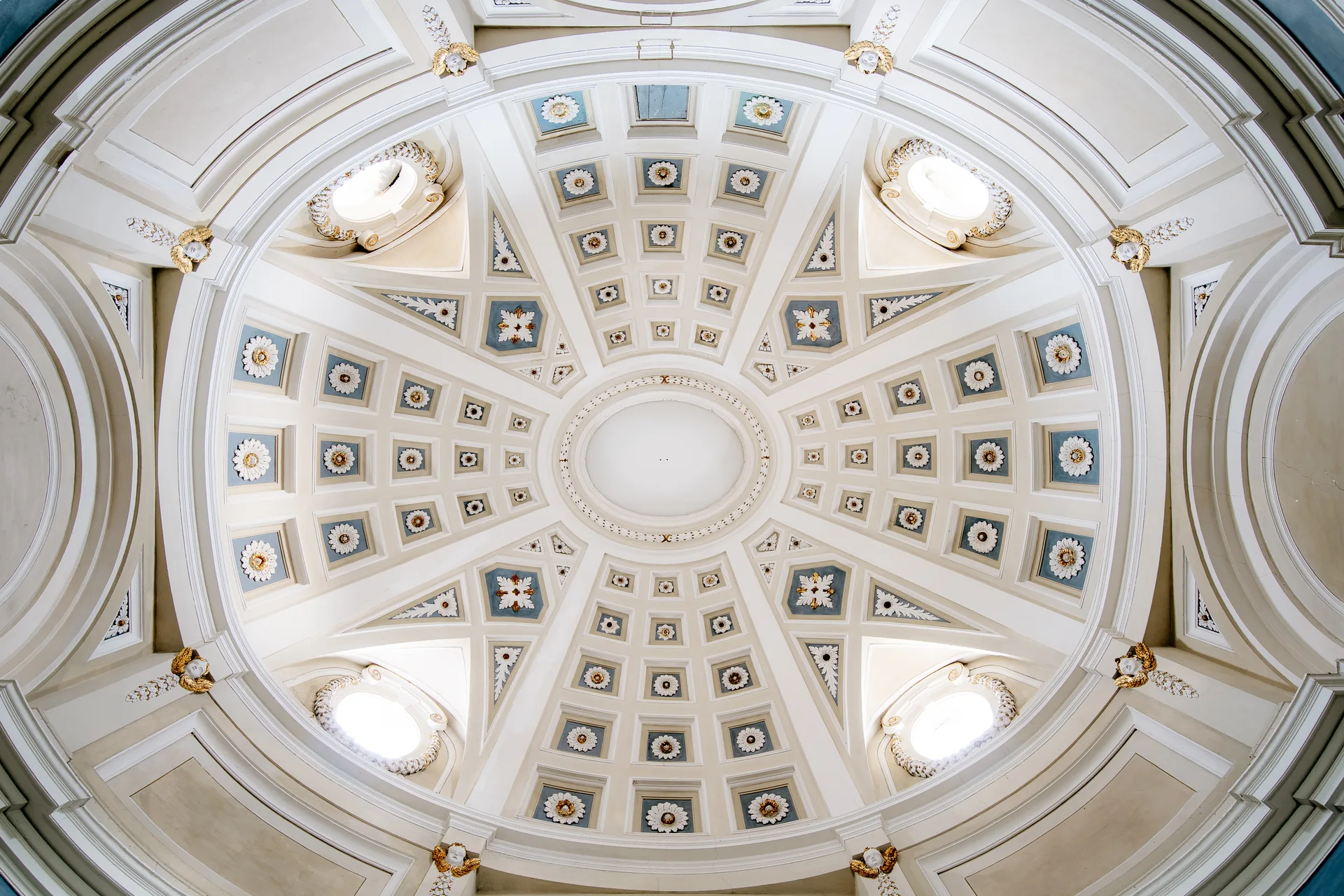
This first church was later demolished, then rebuilt and reopened for worship in 1779, with Ridolfi’s painting—which still adorns it—returned to its place. The church’s elegant façade, punctuated by columns, capitals, and pilasters, is made of terracotta and is topped by a pediment. The elliptical interior, featuring a domed ceiling with coffered panels, houses not only the aforementioned painting but also an interesting floor decorated with geometric motifs that echo the coffered ceiling .
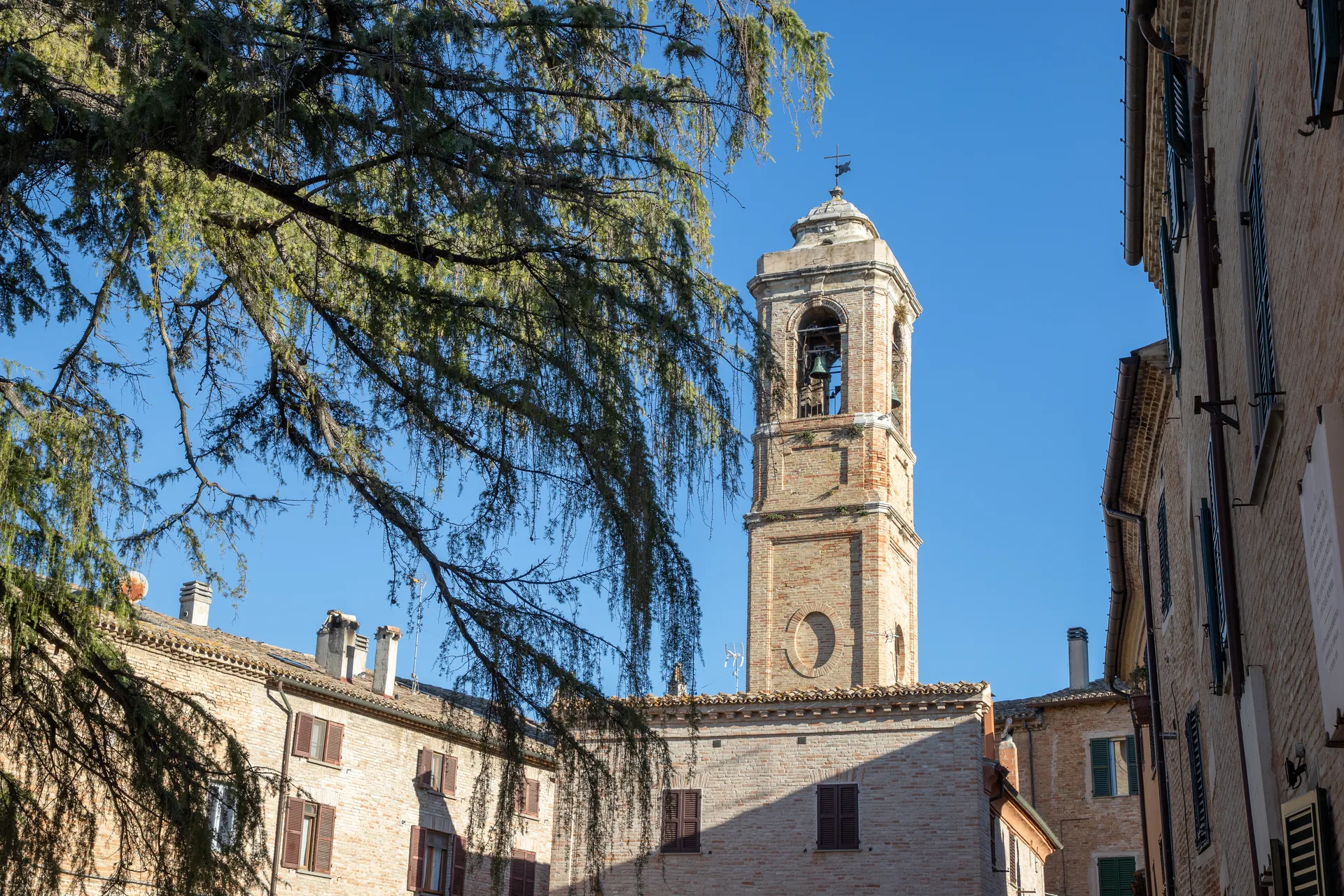
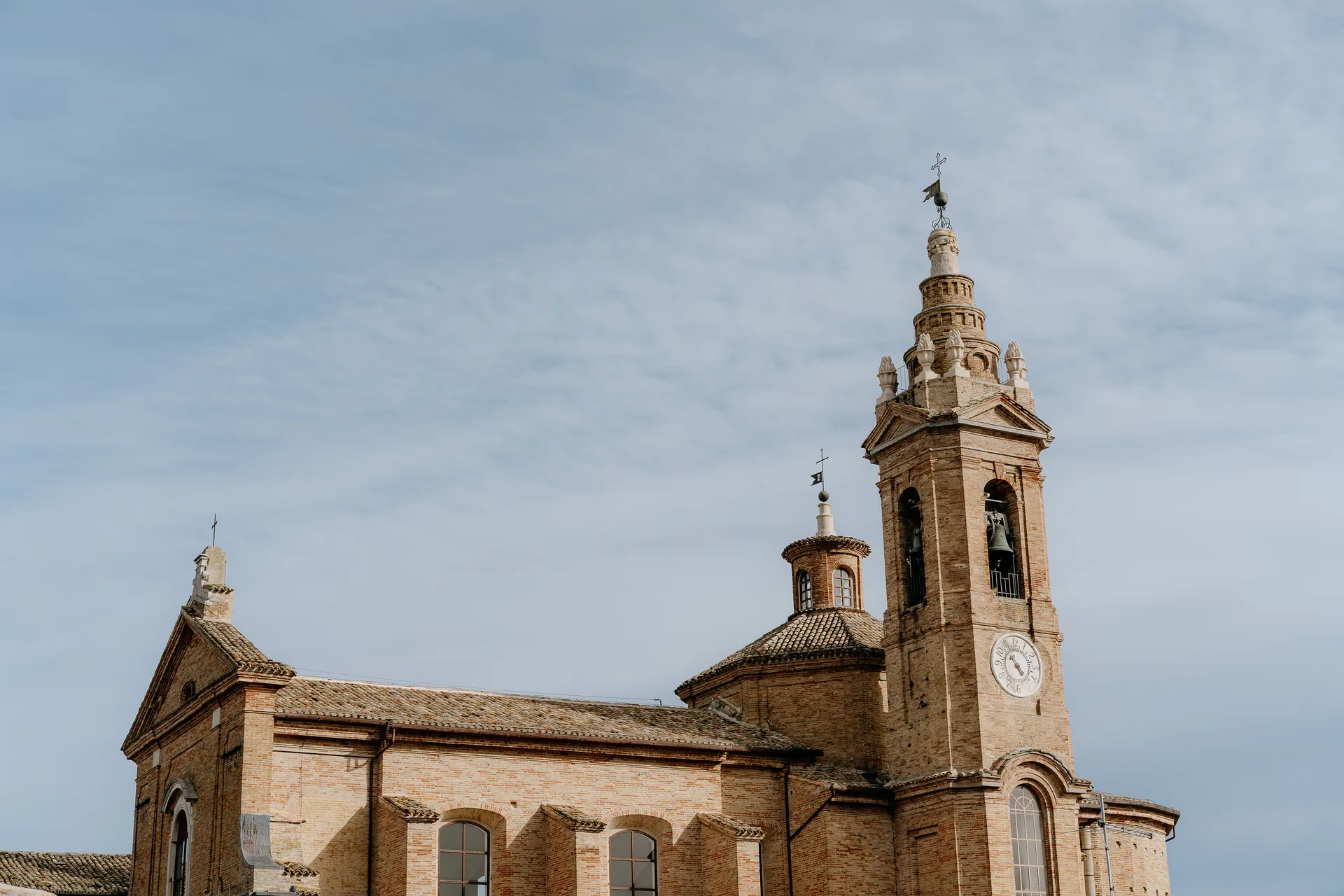
The San Pietro Bell Tower seen from the square of the same name
Bell Tower of San Pietro
In the square of the same name stands the bell tower of the 16th-century Church of San Pietro, formerly a parish church and later a collegiate church, which was demolished in 1870 because it was structurally unsound.
Today, a large Himalayan cedar stands in its place, 43 meters tall and with a canopy 45 meters wide. It is said to have been planted there by an anticlericalist to prevent another religious building from being rebuilt on the site.
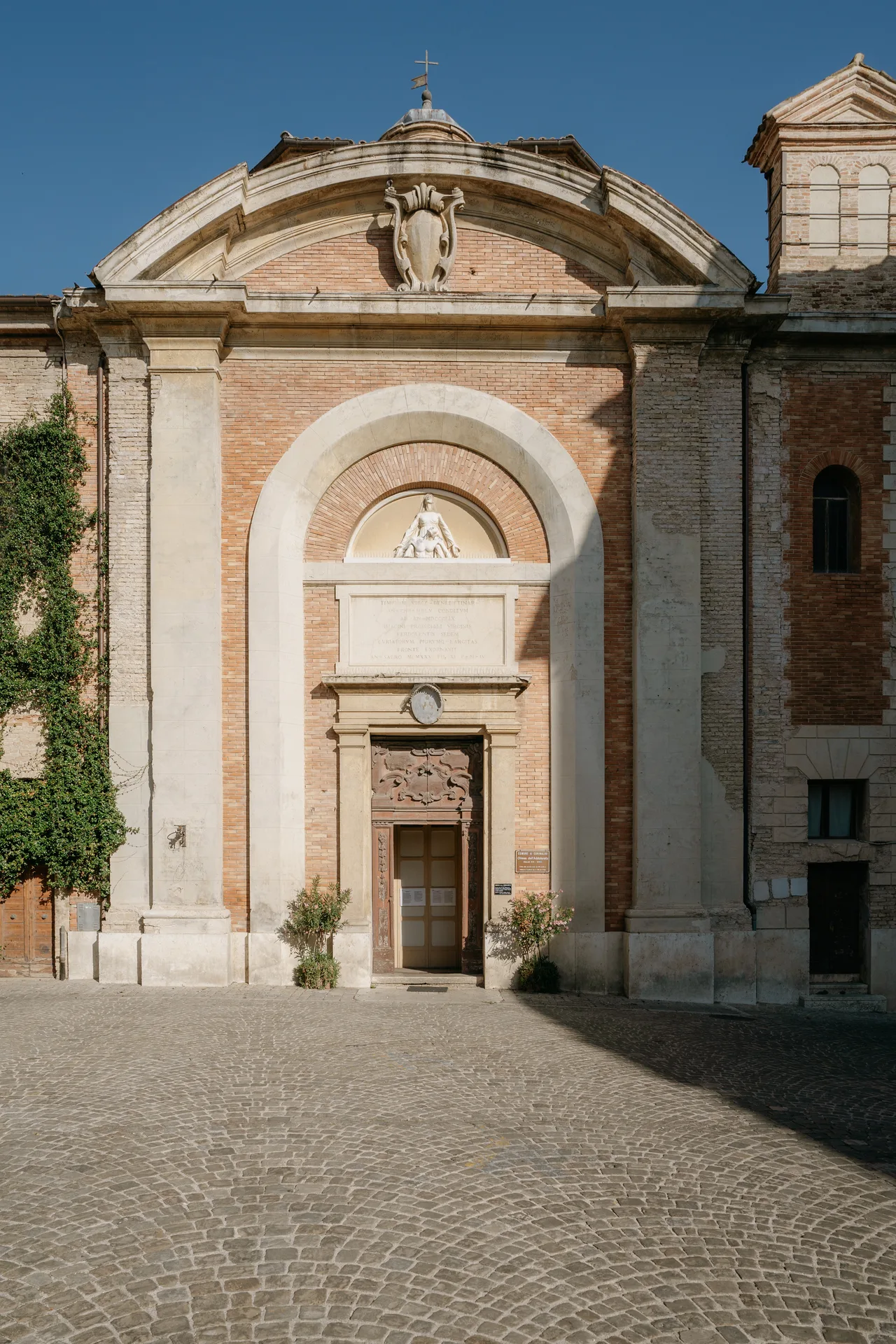
Church of Madonna Addolorata
The church of Madonna Addolorata and the adjacent former convent of the Benedictine nuns were built in the second half of the 16th century.
The current monastic complex, built in the years following 1637, rests on two sides against the city walls. The original rectangular church was demolished around 1730 because it had damp problems. Between 1740 and 1755, the current church was rebuilt and consecrated by Bishop Ippolito De’ Rossi on 30 September 1755. The new church is described in documents from the early 19th century as “well-designed, dry, in excellent condition and very comfortable”.
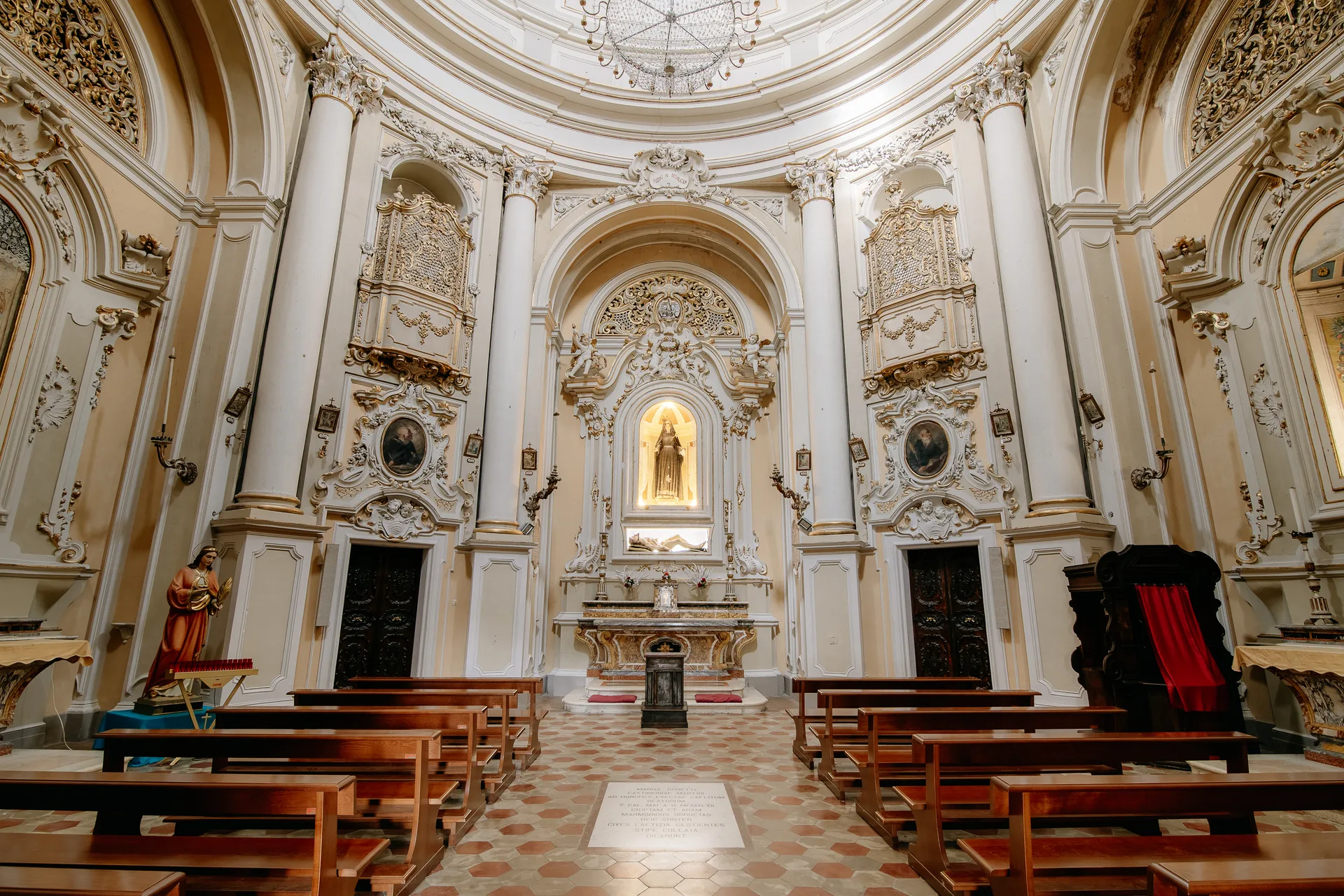
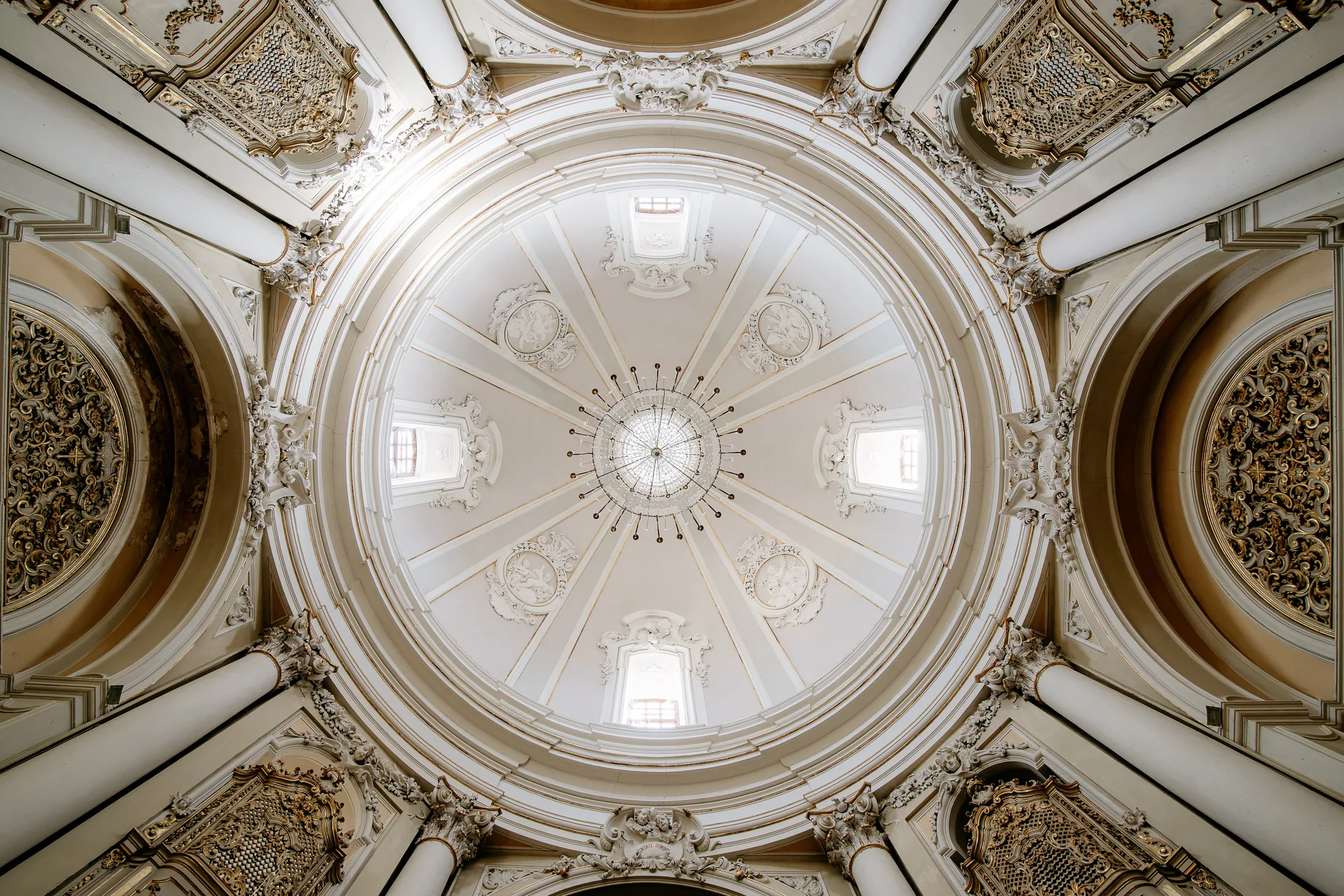
Dedicated to Sant’Anna since its foundation, it took its current name at the beginning of the 20th century. Today, it has a central plan with a dome and lantern, adorned with an elegant and rich Rococo interior with three altars and four valuable wooden doors surmounted by paintings depicting Benedictine saints.
The high altar houses the statues of the Dead Christ and Our Lady of Sorrows, which are carried in procession through the streets of the city on Good Friday evening. The wooden choir loft above the entrance door houses the valuable organ dating back to 1766, the work of Gaetano Antonio Callido, who had a daughter among the nuns of the Benedictine convent.
Church of Madonna del Piano
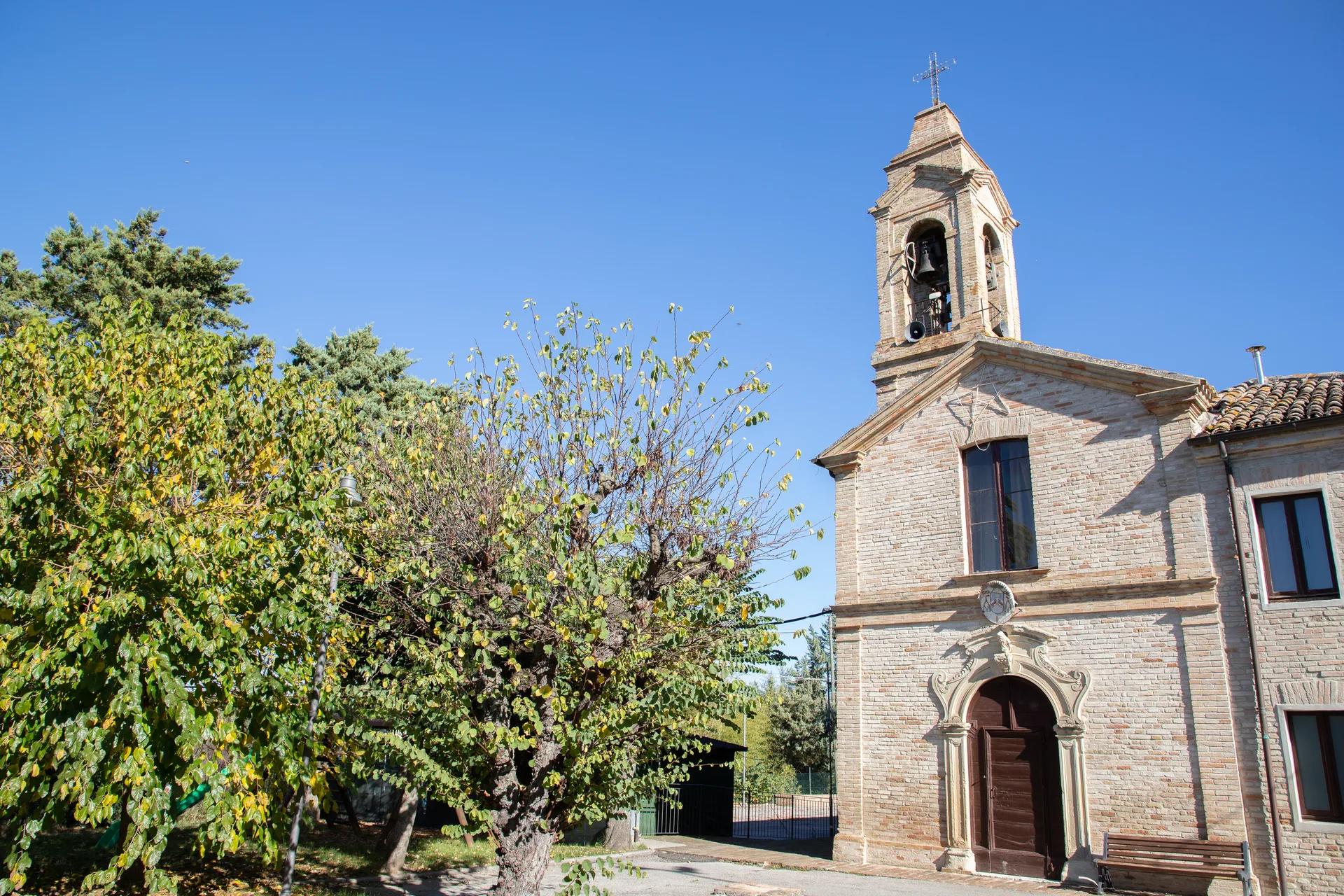
The Church of Santa Maria del Piano is the oldest architectural landmark in Corinaldo and the oldest in the Diocese of Senigallia.
The apse and the remains of the crypt date the building to the turn of the 5th and 6th centuries. The earlier place name “Santa Maria in Portuno” itself attests to the existence at that site of a pagan temple dedicated to the worship of the god Portunus, a river deity. The church, which has undergone significant alterations over the centuries, was undoubtedly the most important and wealthy sacred site in the Corinaldo area during the Early Middle Ages. Having belonged first to the Avellanite monastery and later to the German-Hungarian College, it underwent numerous alterations over the course of its long history. Originally, the church had three naves and an underground crypt beneath it. Further alterations, which changed its original features, were carried out in the 18th and 19th centuries, both in the church and in the adjacent structures.
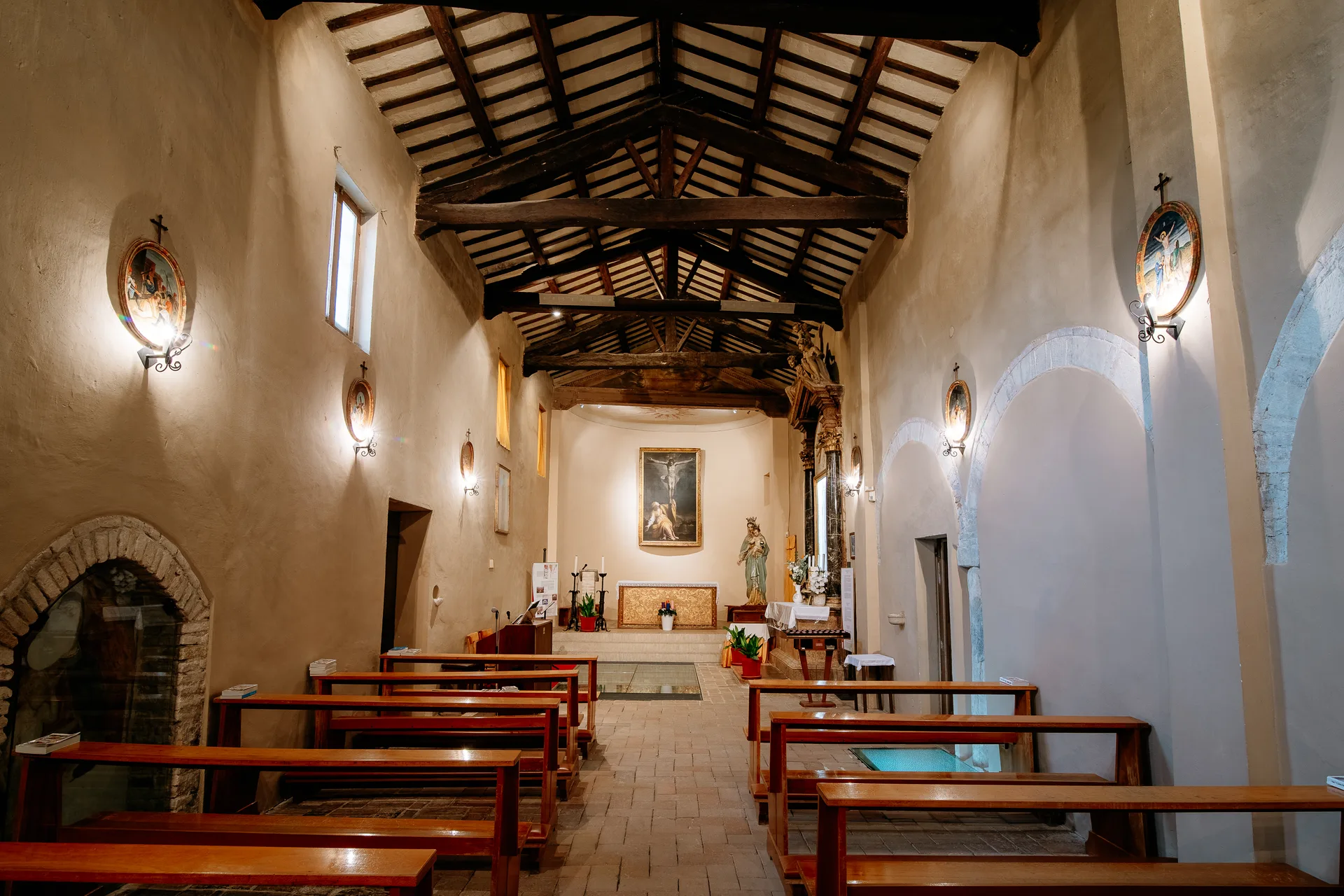
Today, the building features a single nave with a trussed roof and an apse. On the right wall, three Roman-era columns were discovered that originally separated the central nave from the right nave, which is now incorporated into the adjacent building. The marble altar—which may have been moved here following the destruction of the Church of San Pietro in Corinaldo—houses a fresco depicting the Madonna del Buon Conforto, dated 1540 and attributed to the school of Vincenzo Pagani. On the left are two 15th-century frescoes by an unknown local artist depicting the Madonna del Latte. The apse houses a depiction of Mary Magdalene at the Foot of the Cross, a work of great expressive intensity by Claudio Ridolfi.
Beginning in 2001, research and excavations were initiated by the Department of Archaeology at the University of Bologna in collaboration with the Archaeological Superintendence of the Marche region. In addition to various stratigraphic layers dating back to the Roman period, the excavations have revealed a substantial number of burials. The crypt beneath the main altar and the foundations of various buildings that have stood there over the centuries have been unearthed, creating an archaeological park. A small exhibition space has been set up in the rooms adjacent to the church’s sacristy, documenting all phases of the excavations carried out to date.
Church of Sant’Anna
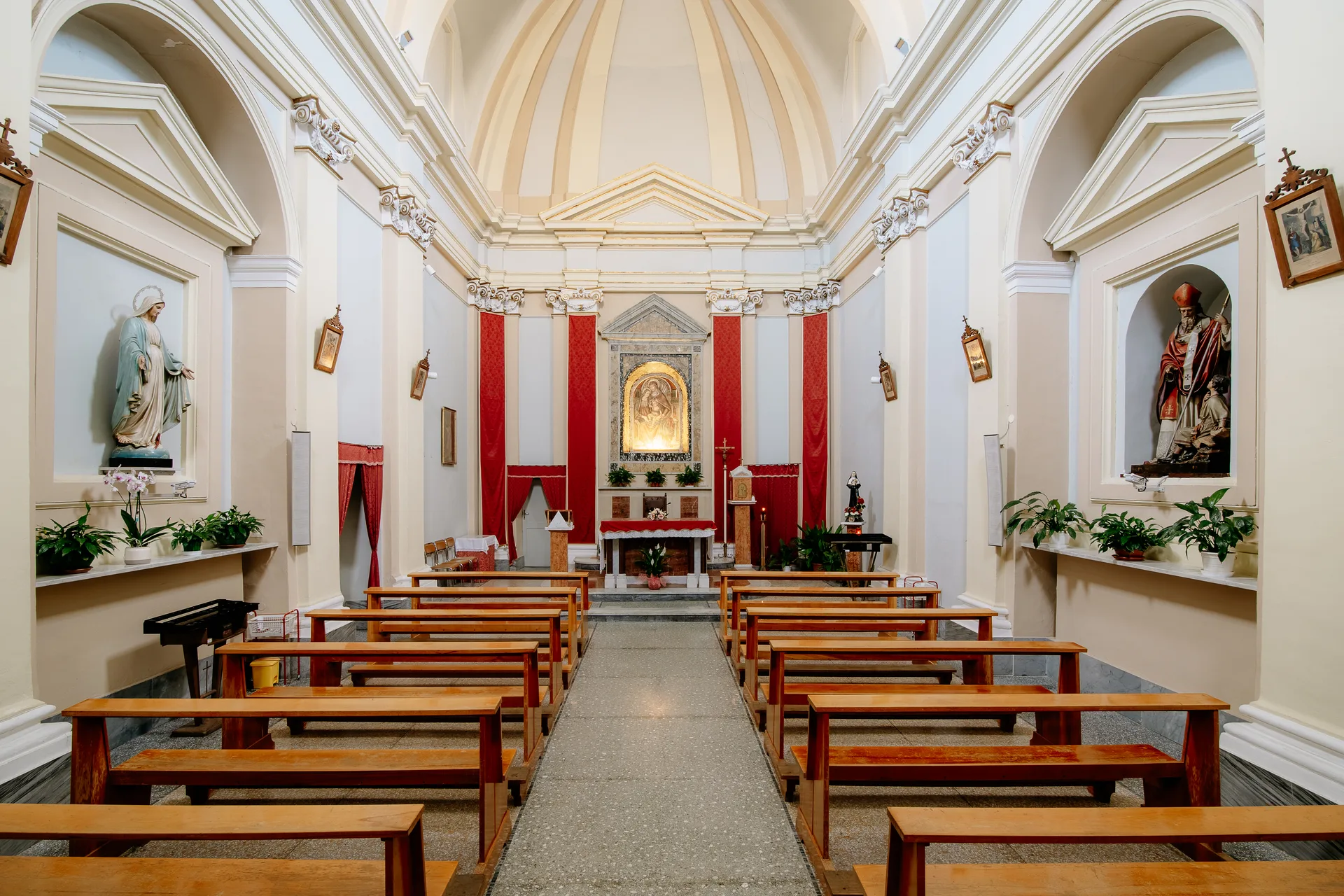
The Church of Sant’Anna was built in the early 16th century by the Hospitaller Order of Santo Spirito, to which it belonged continuously until the order’s suppression was decreed by Pius IX.
During the 16th century, it ceased to function as a place of charitable care, and there are no further records of its hospital. During that same century, Saint Anne was chosen as the patron saint of Corinaldo, as attested by various documents from the period. This choice was confirmed by the Sacred Congregation of Rites on March 20, 1728.
he current building dates back to the second half of the 18th century and preserves a valuable late 15th-century fresco depicting Saint Anne holding the Virgin Mary on her lap, who in turn holds the blessing Child. The work is perhaps attributable to Francesco di Gentile da Fabriano, a brilliant painter active in the area between the late 15th and early 16th centuries.
Collegiate church of San Francesco
In 1265, Cardinal Simone Palatinari blessed the cornerstone of the new Church of San Francesco, construction of which likely was completed in 1281—the year a bell was cast that still hangs in the bell tower today. Only a few architectural remnants of this early structure remain.
In 1528, a new cloister was built in the adjacent convent, and ten years later, the old church was expanded; however, by the early 17th century, it had already become cramped and artistically outdated, so it was rebuilt in 1638–1639 in accordance with the tastes of the time. In the 18th century, several earthquakes—particularly the one in 1727—made further work necessary. In 1749, construction of the convent was completed, while between 1752 and 1759 the new church was built according to the design of architect Arcangelo Vici of Arcevia.
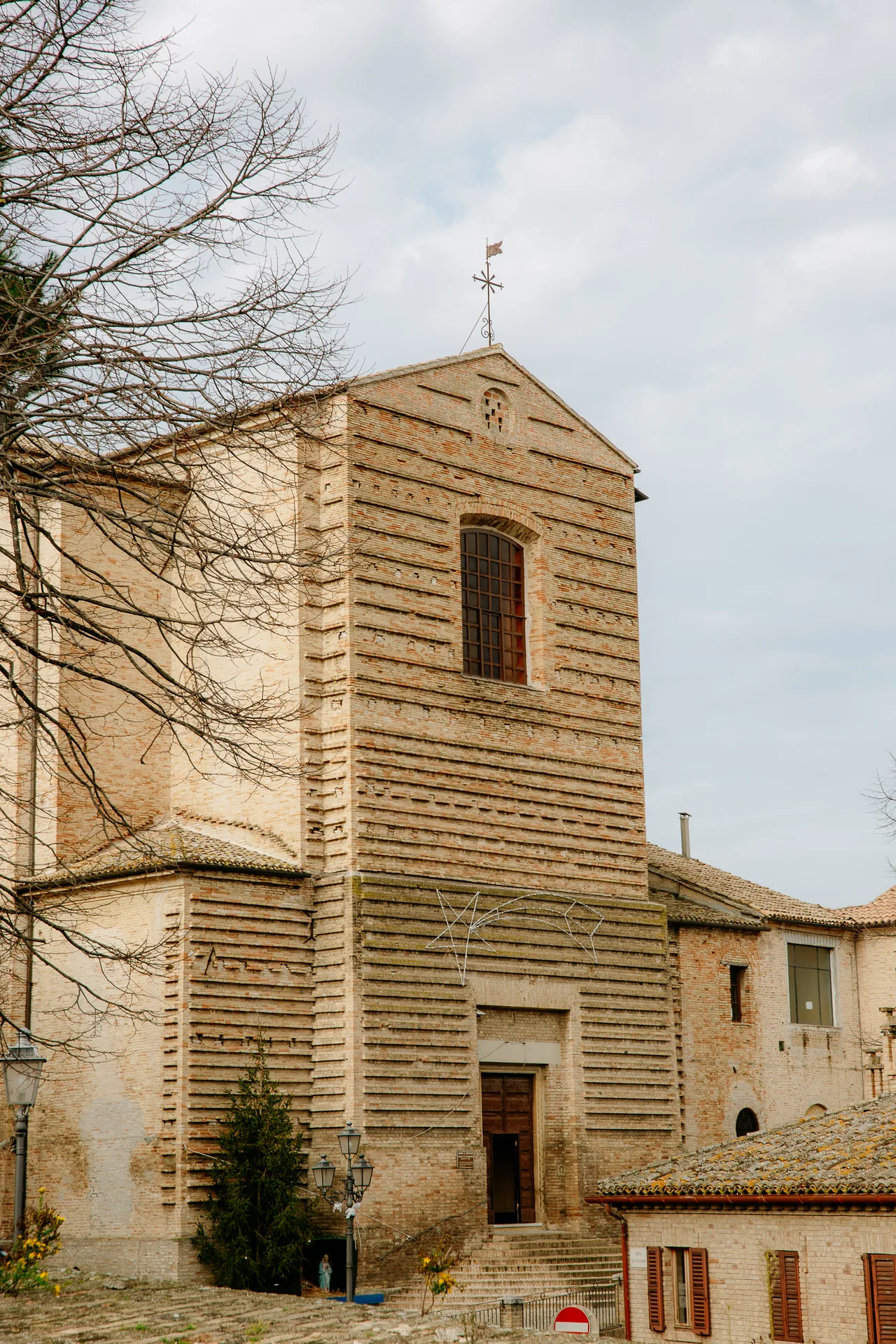
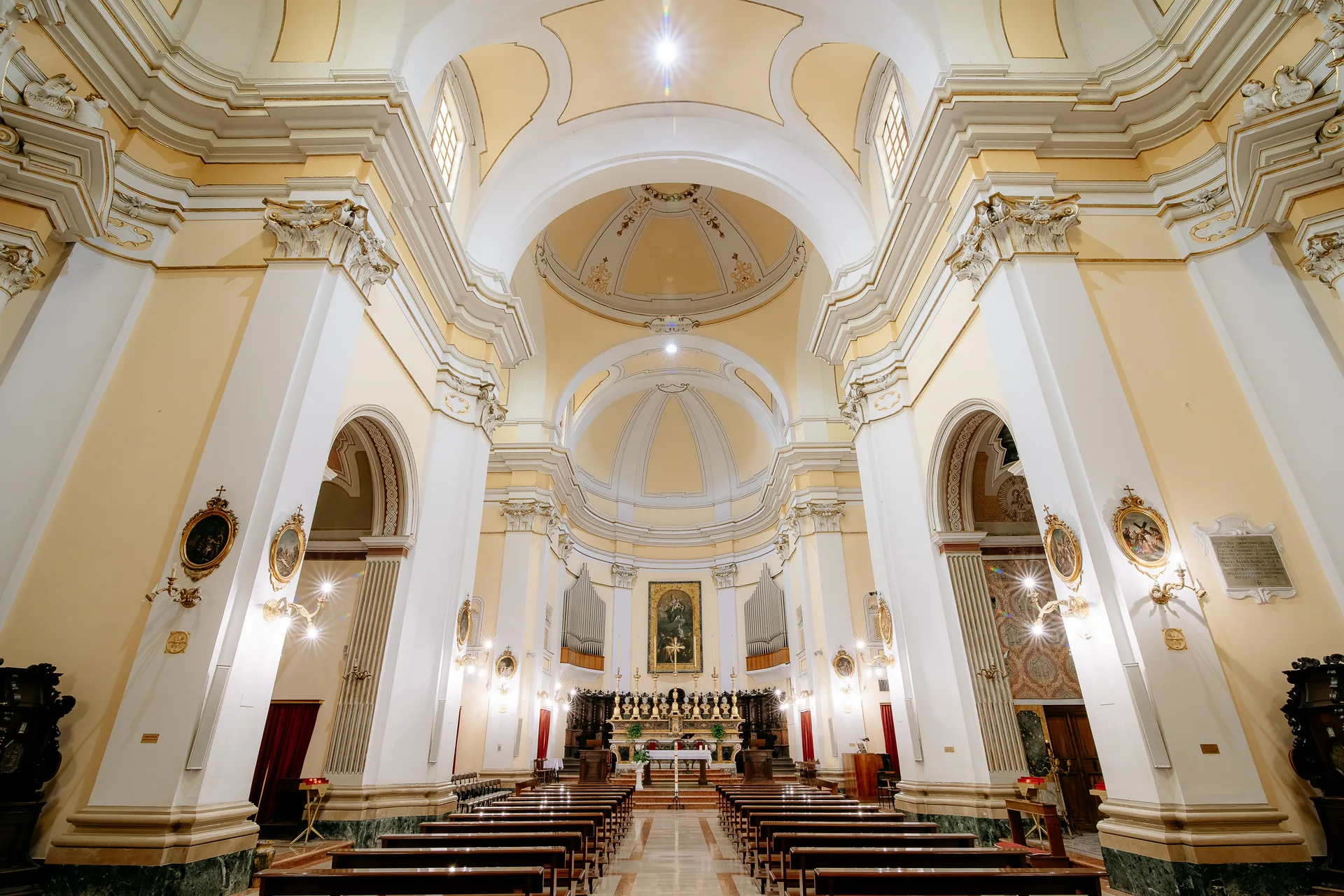
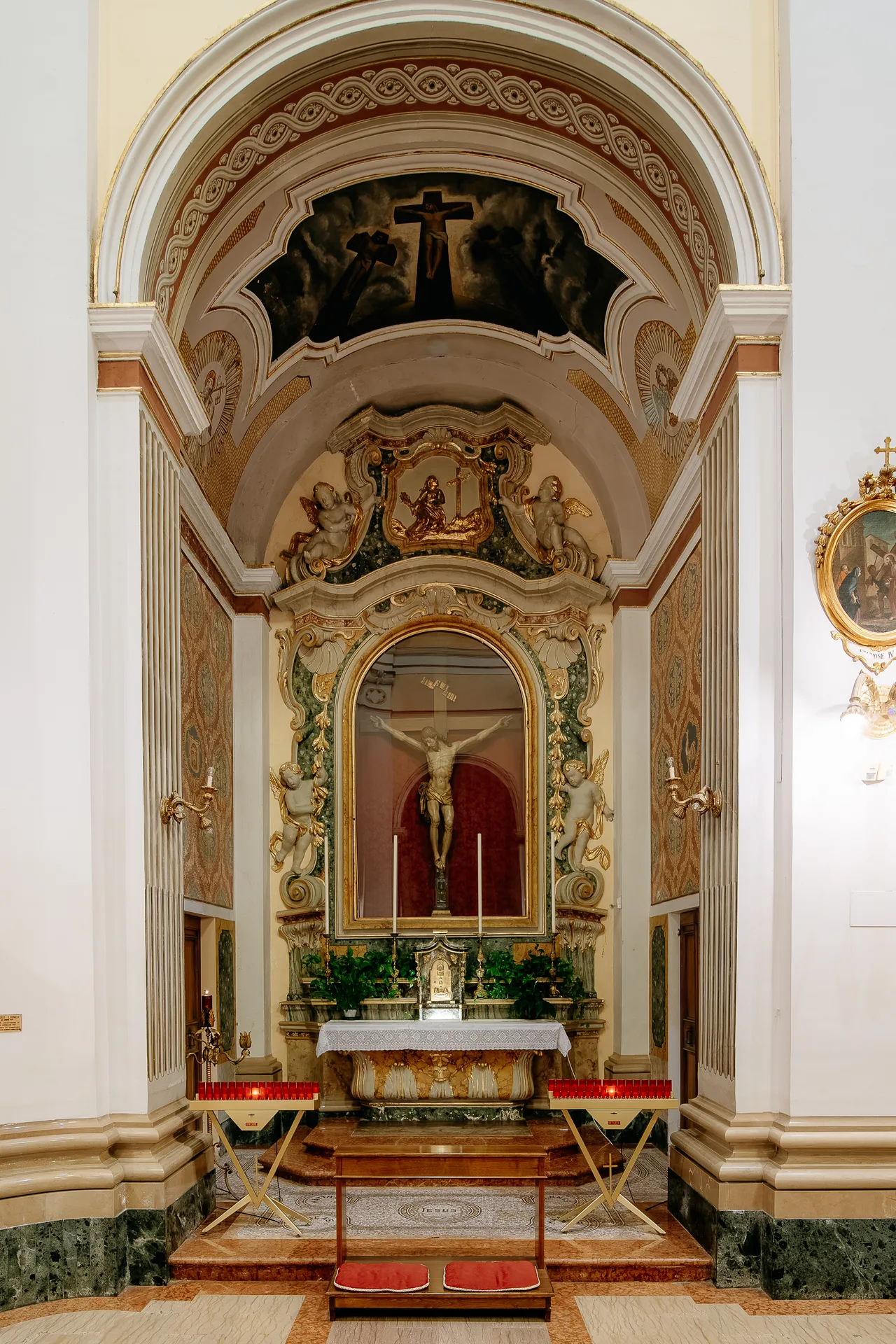
Around the 1930s, it became a parish church, a status it has retained to this day. The church, with its unfinished façade, has a Latin cross plan featuring a single nave with side chapels, a transept surmounted by a dome, and an apse. It houses three paintings by Claudio Ridolfi: the Annunciation, the Madonna and Child with Saints Anne, Joseph, and Anthony of Padua, and the Assumption of the Virgin. The third side chapel on the right houses a precious wooden crucifix carved in 1575 by the sculptor Donnino da Urbino. Next to the first wooden altar—which came from the destroyed Church of San Pietro—on the left is the tomb of Don Giacomo Luzietti (Corinaldo 1931 – Brezzo di Bevero 1994).
Sanctuary of Madonna dell’Incancellata
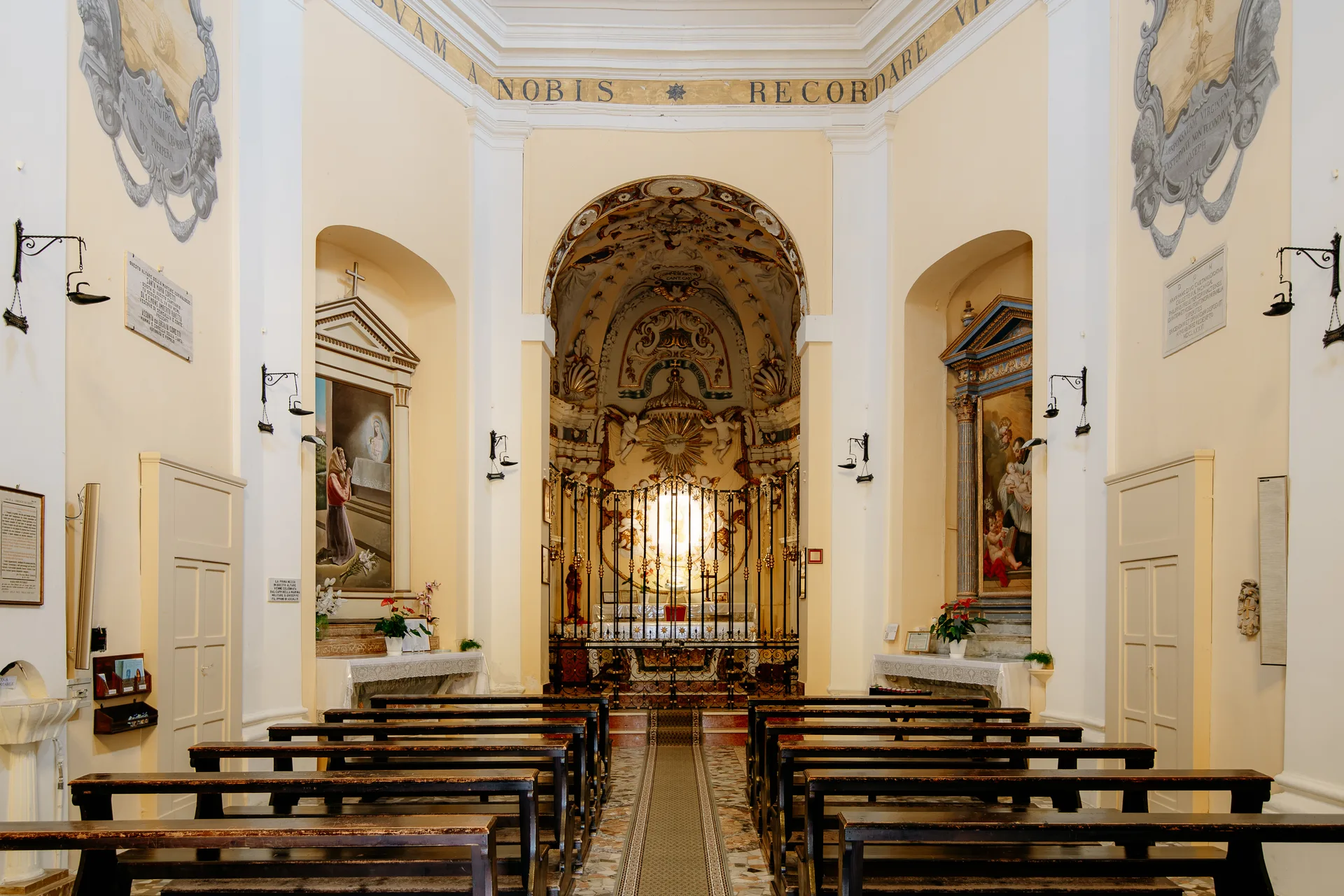
In the area known as “Casalini” or “Pozzo Antico,” there once stood a small wayside shrine featuring a painting of the Virgin Mary nursing the Child. The shrine was owned by the Martinelli family of Corinaldo, who donated it in 1586 to the Archconfraternity of the Gonfalone of Corinaldo, which already owned the Church of Santa Maria di Piazza
In the years that followed, the shrine—which had been located further down the valley from the present-day church—was moved to its current location, and a small chapel was built around it, corresponding to today’s presbytery, which is enclosed by a gate. Later, the influx of a large number of the faithful and pilgrims who came to worship the sacred and miraculous image convinced the members of the Gonfalone to build a house for the caretaker and a lodge to shelter pilgrims, which was later converted into a church. A small stream flowed in front of it; this water was channeled into a well inside the church, from which miraculous healings occurred. Prelates, cardinals, and princes, along with ordinary people, flocked in large numbers to venerate this sacred icon and to drink from or wash in the miraculous water.
In 1690, the church was completely rebuilt, with the exception of the section behind the gate, which had been erected in 1625 in its current form. It was on that occasion that the rector at the time, Father Filippo Fontini, commissioned the painting of Saint Gaetano, now located on the right-hand altar. This is the church where Saint Maria Goretti used to go to pray. The fresco of the Madonna del Latte, above the high altar, was restored in 2007, revealing two layers of repainting, including the original image of the Madonna, dating back to the late Renaissance and belonging to the Umbrian-Marche school—likely the school of Pinturicchio.
Diocesan Sanctuary of Santa Maria Goretti
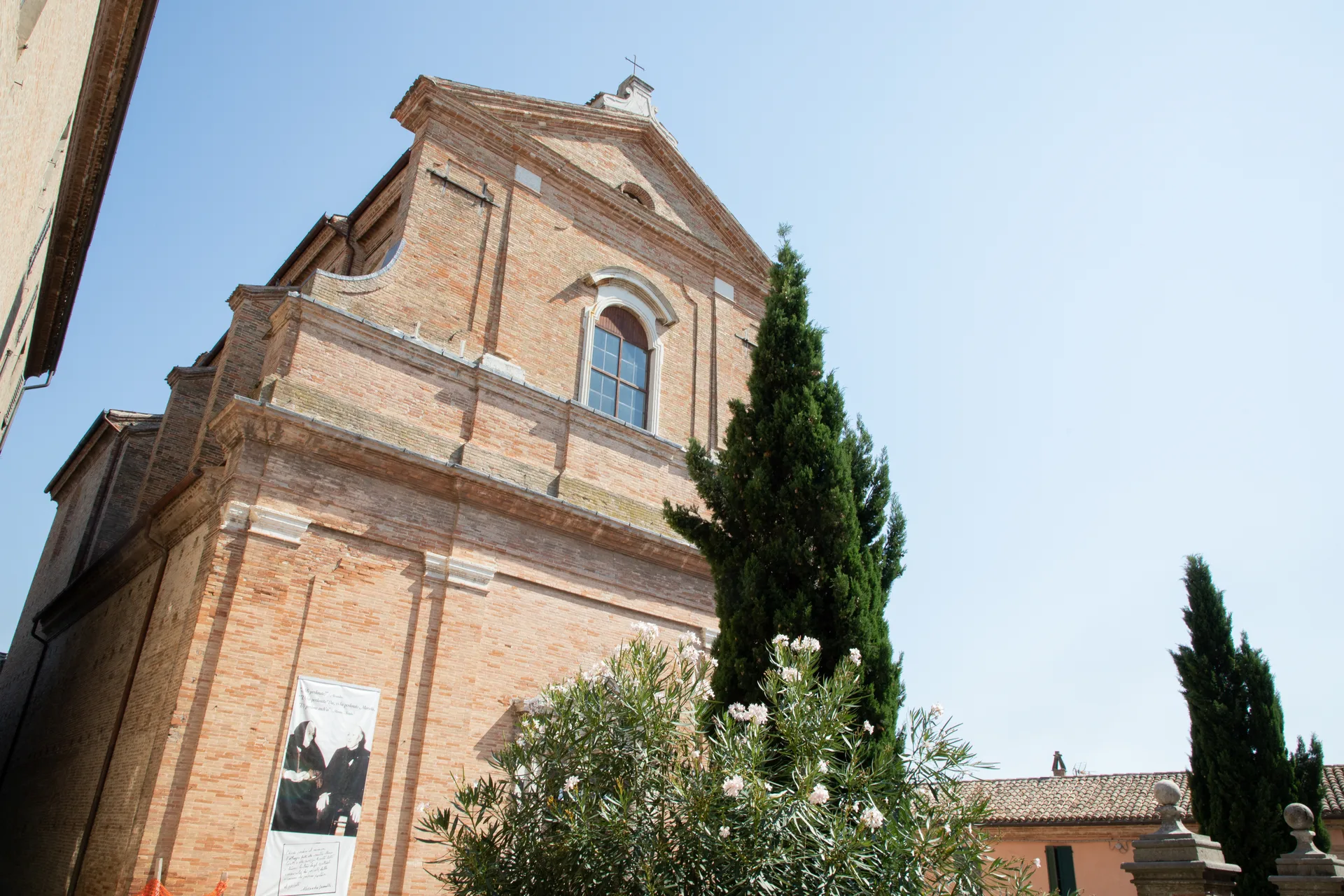
The Church of San Nicolò, known as the Church of Sant’Agostino and now the Shrine of Santa Maria Goretti, and the adjacent former monastery were built in their present forms during the 18th century. The church was built between 1740 and 1756, while the monastery was constructed between 1767 and 1780 based on a design by the Corinaldo architect Giuseppe Carbonari Geminiani.
The ancient medieval Church of San Nicolò was incorporated into the convent building during its 18th-century construction. Traces of this church remain in the rounded section of the building located at the beginning of Via del Velluto, which was originally its apse. The entire building, like other architectural complexes belonging to religious orders suppressed first during the Napoleonic reign and later due to annexation into the Kingdom of Italy, was taken from the Augustinian Hermits and became part of the state’s assets, to which it still belongs.
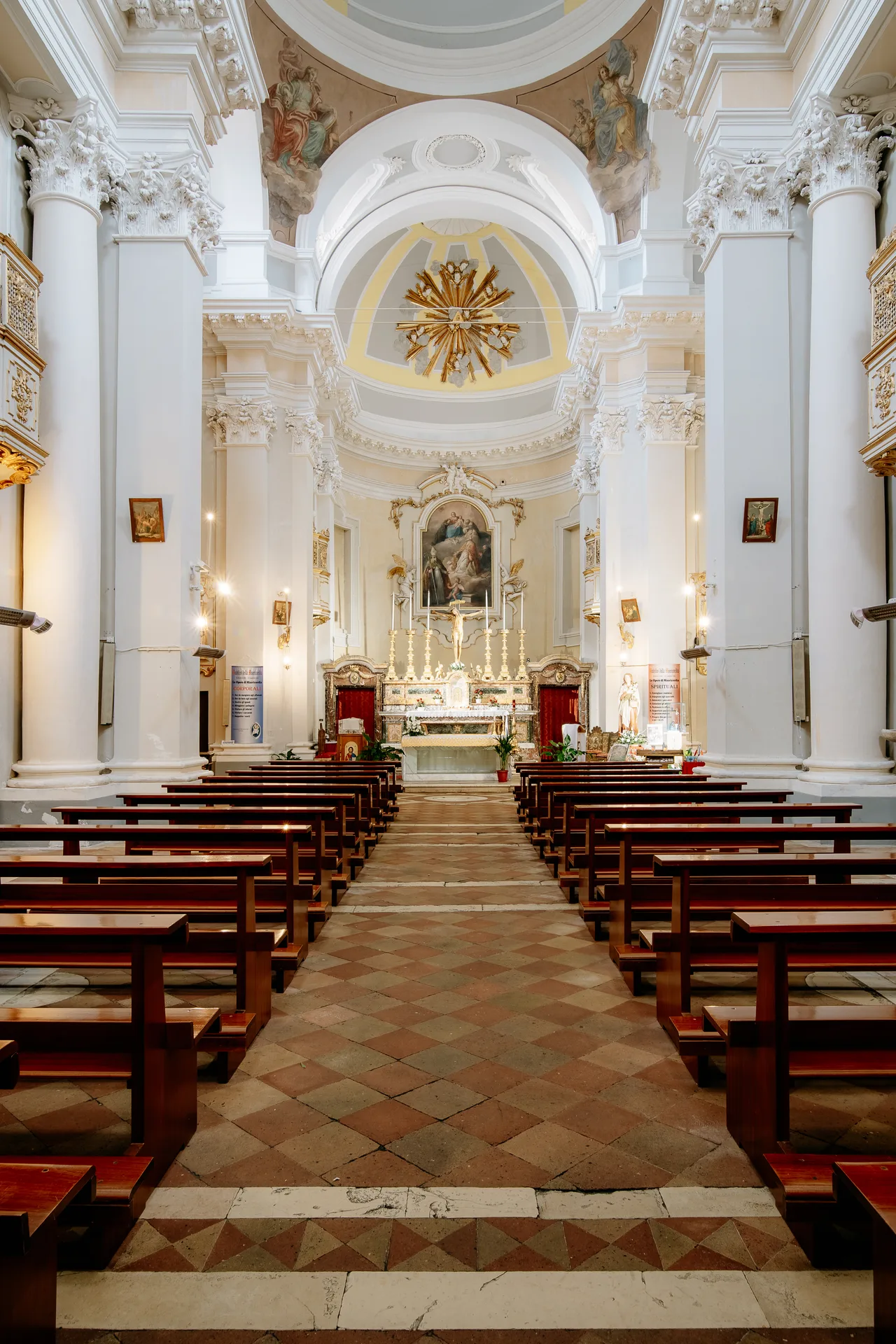
The sanctuary features an elegant brick façade with pilasters whose bases and capitals are made of limestone. The interior, featuring a single nave in the shape of a Latin cross, with a dome and lantern in the transept area, is a fine example of late Baroque architecture, not lacking in elegance in the variety of its pictorial and scenographic effects. The church houses numerous works of art: a 17th-century *Annunciation*, a copy by Federico Barocci; a *Martyrdom of Saint Bartholomew* by Cesare Maggeri; a *Madonna and Child with Saints Monica, Dominic, Nicholas of Mira, Anthony the Abbot, and Augustine by Carlo Maratta; the spherical pendentives of the dome are adorned with frescoes depicting Prudence, Justice, Temperance, and Fortitude. Above the entrance door, a large wooden choir loft, clad in the same material, houses a precious organ, built in 1767 by Gaetano Antonio Callido.
Set within the high altar, made of white Carrara marble, is a wooden statue of Saint Maria Goretti and a silver urn containing a bone from the saint’s arm, with which the martyr attempted to defend herself against her attacker. To the left as you enter is the tomb of Mamma Assunta, who died in Corinaldo in 1954, while to the right is that of Alessandro Serenelli, the murderer of the young saint.
The birthplace of S.Maria Goretti
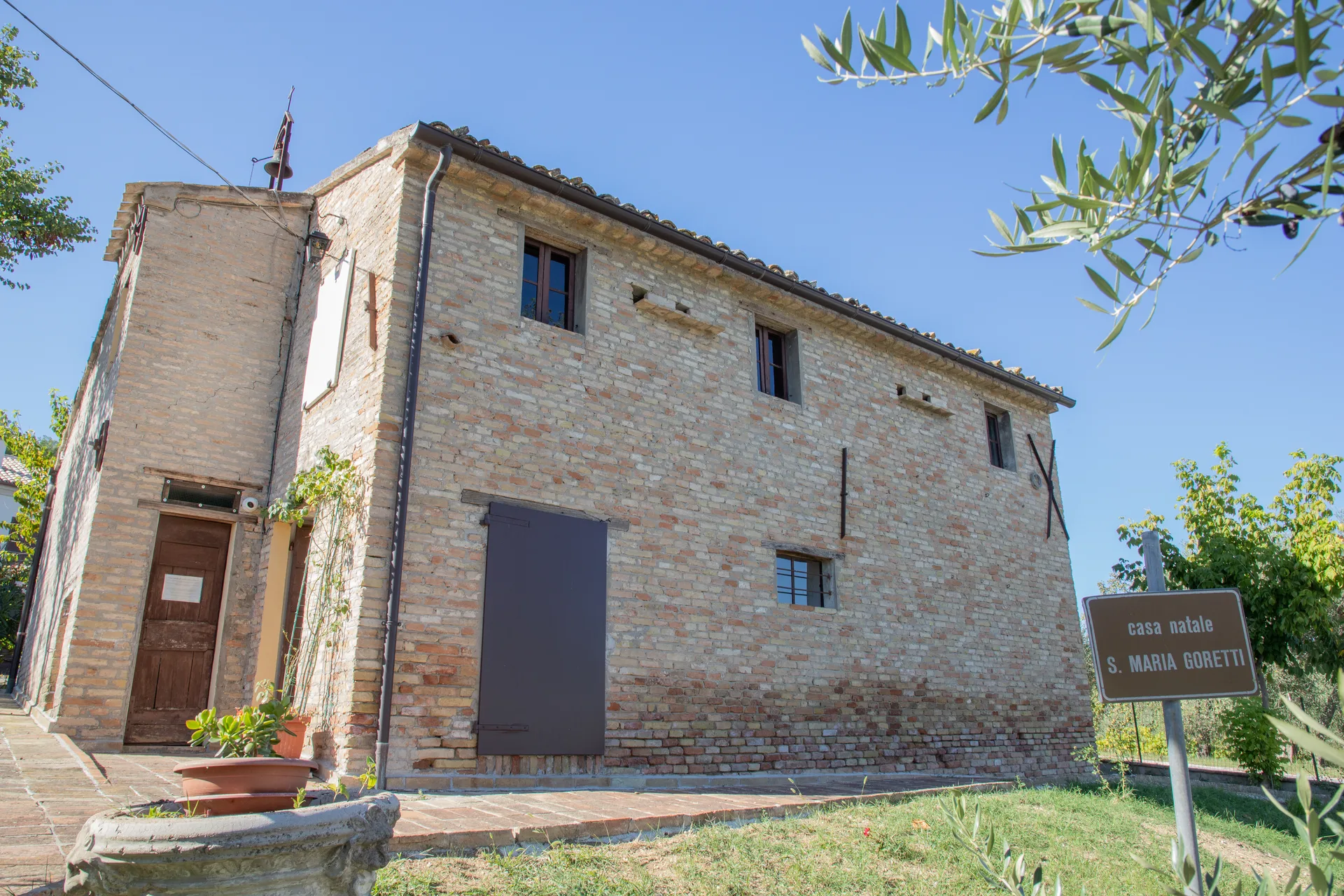
Not far from the historic centre, in the “Pregiagna” district, stands the Birthplace of Saint Maria Goretti, which is also easily accessible by bus from Viale degli Eroi: turn right heading north and follow the country road for about one kilometer until you reach a large open space with a small two-story farmhouse directly across from it.
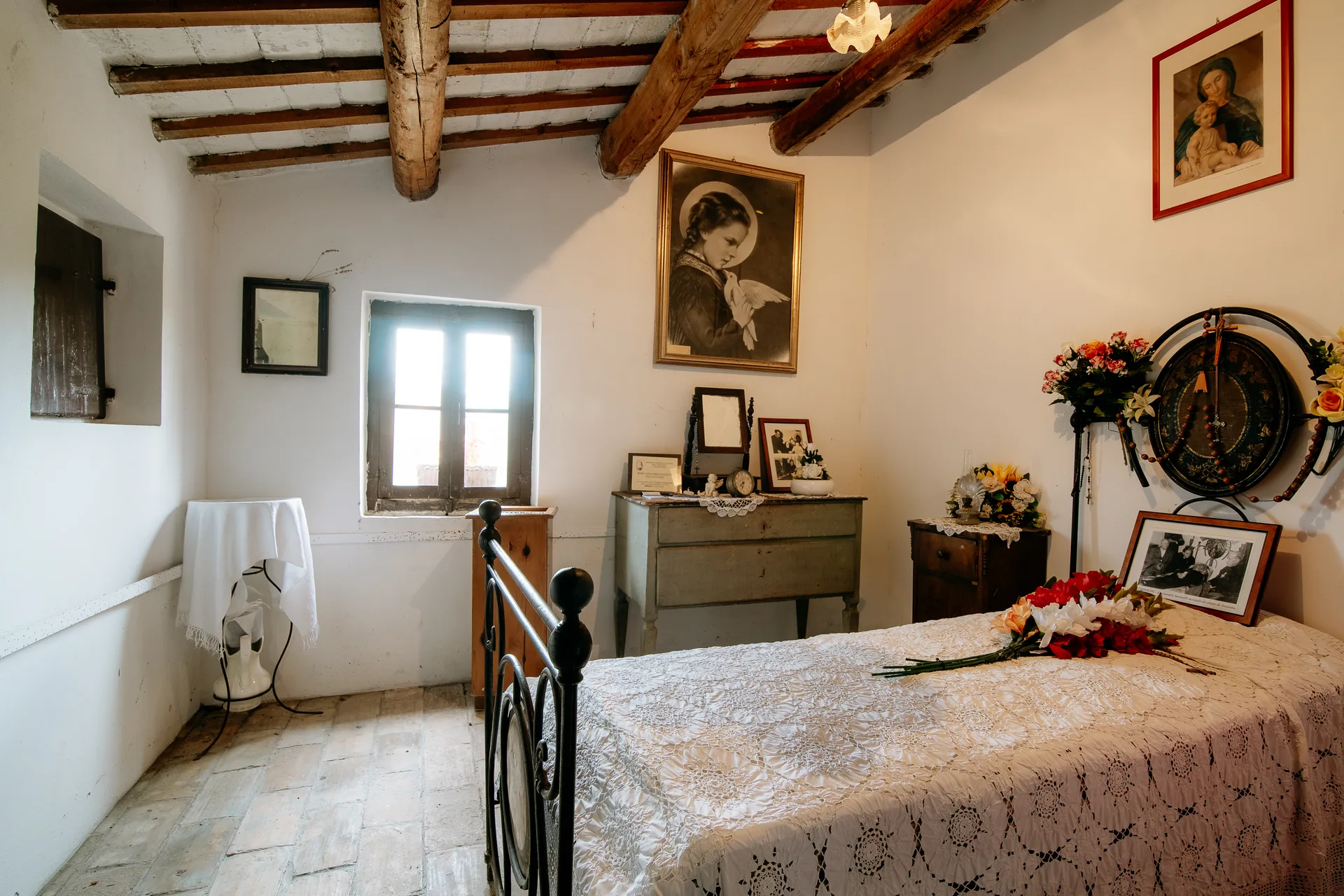
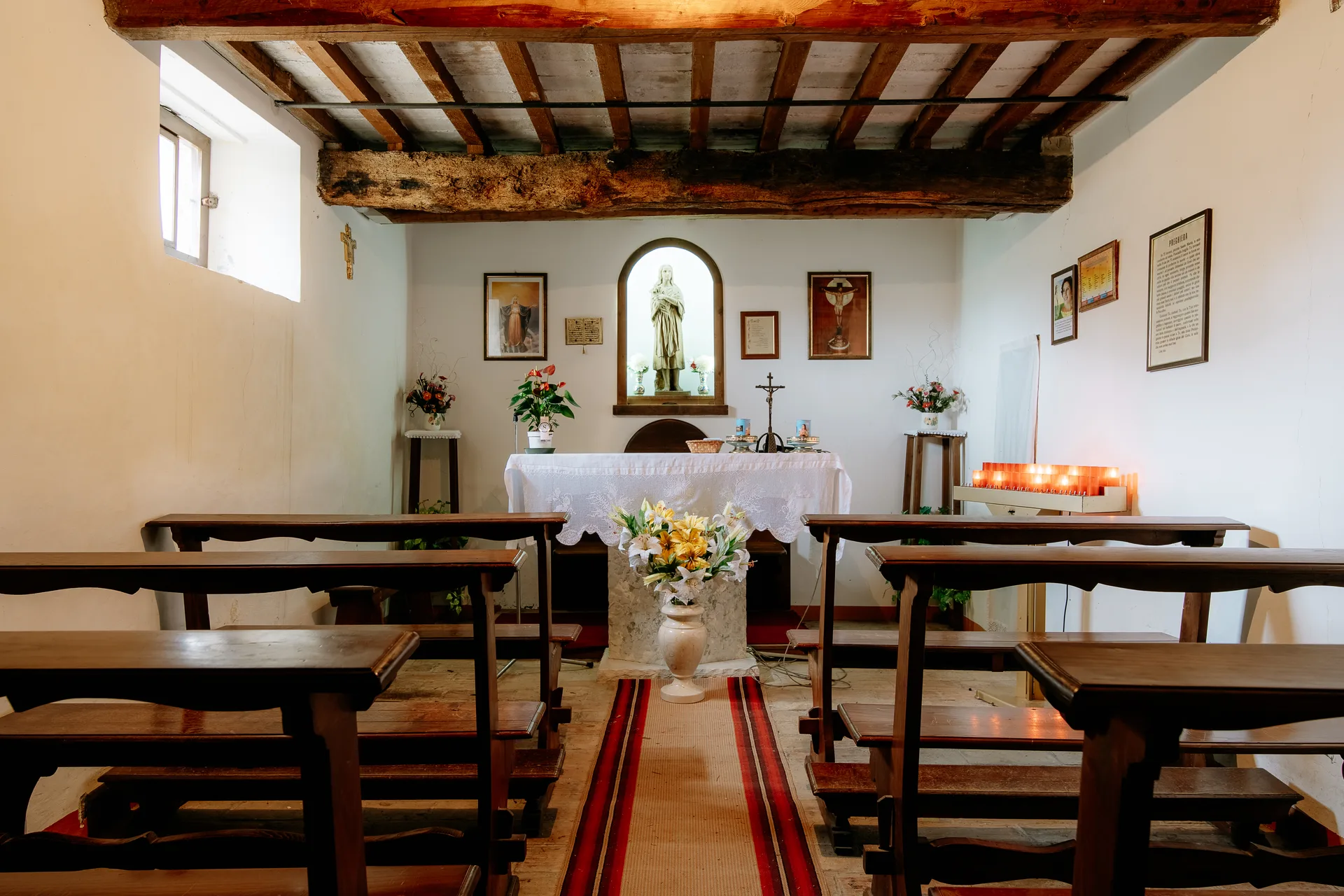
On the ground floor, the house still features a room with elements of the original stable, while the space that once housed the cellar now contains a small chapel dedicated to Santa Maria Goretti. Upstairs is the dining room, with a fireplace in the centre, and two other rooms. On the left is the bedroom of Luigi Goretti and Assunta Carlini: it was here that “Marietta”—as she was known in the family—was born on October 16, 1890. This room contains original furniture belonging to the Goretti family, including the bed and the painting above the headboard donated by Mamma Assunta.
Need more information?