Santa Maria in Portuno
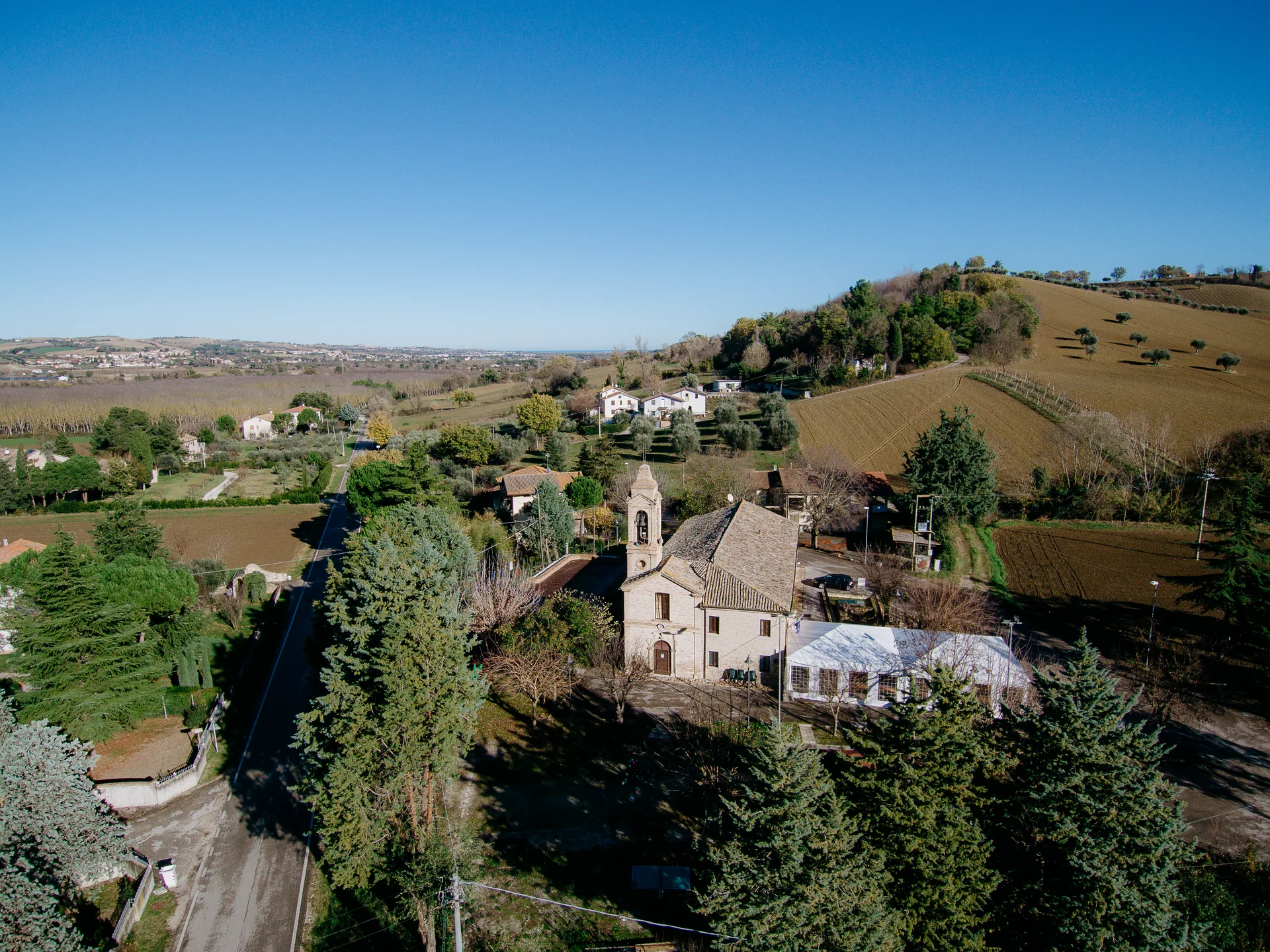
A site that spans millennia of history. From the Roman settlement on the Cesano ford to the medieval monastery, through to the Baroque church that still preserves its 17th-century masterpieces today
The Santa Maria in Portuno site is one of the most fascinating archaeological palimpsests in the middle Cesano Valley.
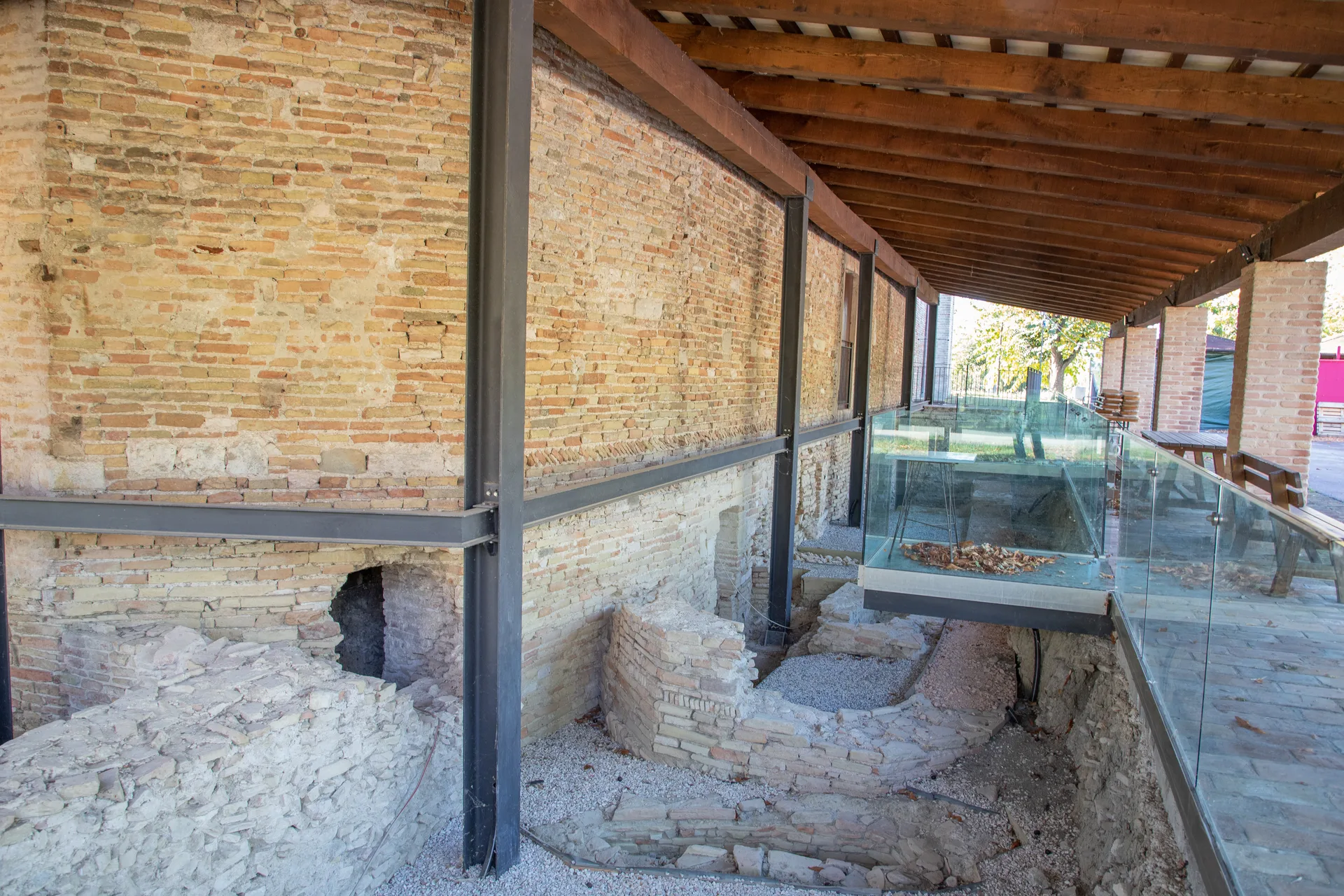
In Roman times, the site was home to an important manufacturing area located near a ford on the river: the name of the god Portunus, protector of harbours and river crossings, refers precisely to this strategic function. Investigations conducted by the Department of Archaeology at the University of Bologna, in collaboration with the Superintendence of the Marche, have brought to light a Roman industrial district specialising in the production of bricks and ceramics, confirming the area’s economic vocation since ancient times.
From the Roman Milestone to the medieval Monasterium
The site’s logistical importance during the Imperial period is attested by the famous Corinaldo Milestone, a 4th-century A.D. roadside marker found near the church. This artefact, which bears inscriptions dedicated to the emperors Maxentius and Constantine, marked the distance of 184 miles from Rome and underlined the crucial role of this road junction in controlling the territory. The site remained in continuous use throughout the early Middle Ages, when the place of worship evolved into an important Monasterium. The oldest documents, such as the Charter of Fonte Avellana of 1090, attest to its original name, S. Marie que dicitur in Portuno, which changed in 1224 to Madonna del Piano.

The architecture: Roman reuse and 18th-century restorations
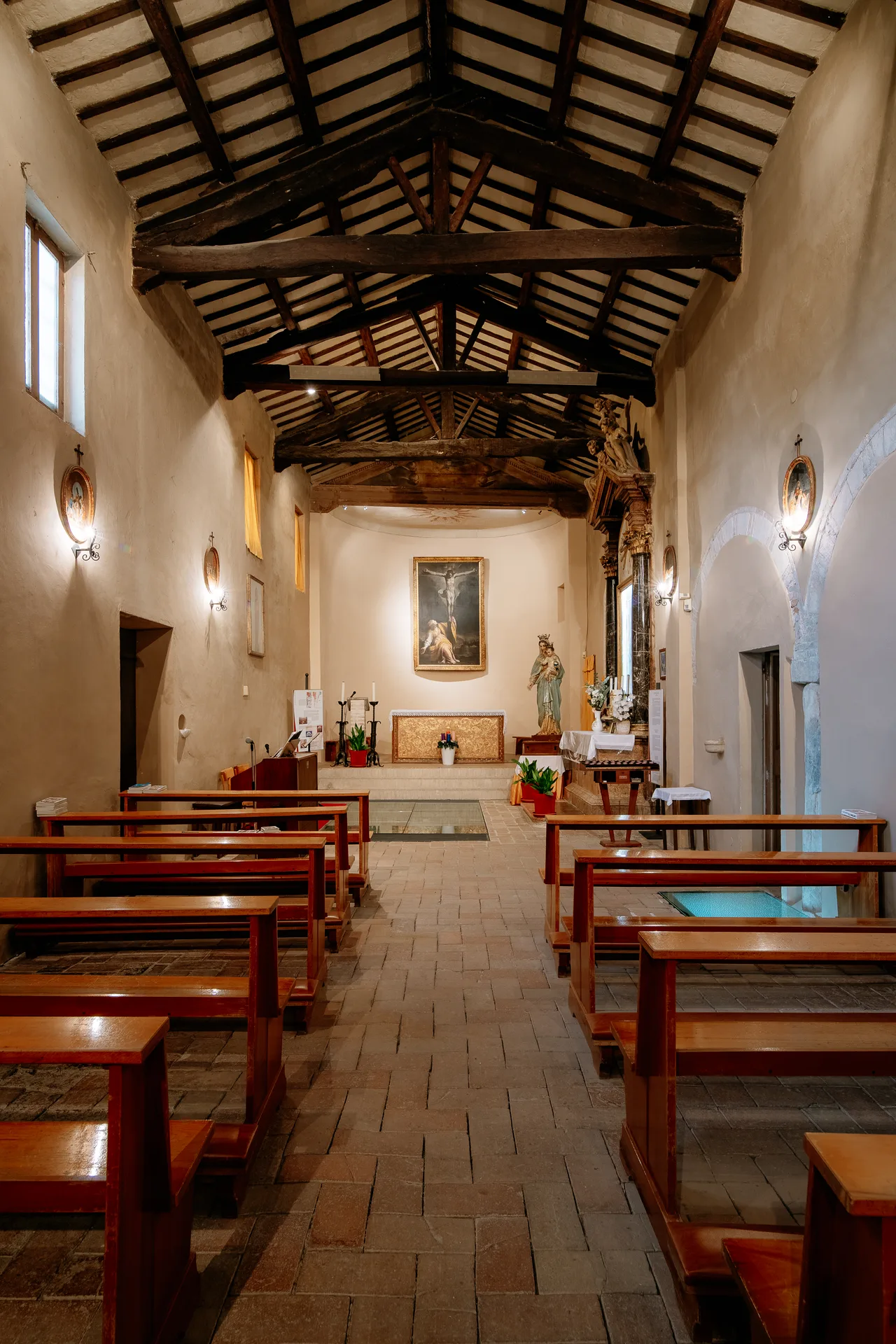
Inside the church, the practice of reuse is evident in the three imposing Roman columns of the right aisle, salvaged elements that coexist with later masterpieces, including a precious painting by Claudio Ridolfi. The building’s current appearance is the result of 18th-century restorations carried out by the German-Hungarian College, which raised the floor level, rebuilt the façade and added the bell tower, incorporating the earlier Romanesque and early medieval phases.
The finds and the daily life of a thousand-year-old community
The excavations have yielded 7th-century African oil lamps, evidence of long-distance trade, and soapstone pots imported from the Alps, prized for their exceptional thermal properties in cooking. These discoveries, together with the investigation of the vast surrounding cemetery areas, make it possible to reconstruct not only the architectural evolution of the site but also the gestures and rituals of a community that for over a thousand years has regarded this ford as a defining feature of its identity.


Informazioni aggiuntive
Outdoor panels recount the phases of the excavation, while an indoor exhibition hall presents the ancient productive activities together with the finds uncovered.
Visits are available by reservation for groups of at least 10 people.
Tel: +39 333 5351396 – +39 377 2816804
Need more information?