The Tomb of the Prince of Corinaldo
In 2018, almost a hundred objects that emerged from the soil of the Nevola Valley restored the identity of a 7th-century B.C. Picene prince. A discovery that turned Corinaldo into one of the most important archaeological sites in Italy.
Corinaldo is now at the heart of one of the most important archaeological projects in the Nevola River Valley. Thanks to the discoveries made here, the project has taken on international scope and significance. The ArcheoNevola project, launched in 2017 by the Department of History, Culture, and Civilisation at the University of Bologna, aims to study the valley and its ancient settlement patterns through an approach that combines traditional methods of archaeological excavation and surface survey, with the use of modern non-invasive exploration techniques, such as aerial photography and geophysical surveys for mapping the underground. Research methods also used in Corinaldo.
The Discovery and Excavations
The extraordinary discovery of the Picene necropolis in Corinaldo stemmed from a serendipitous insight during an aerial survey of the valley. Archaeologists noticed two circular marks on the ground: these were “cropmarks” (variations in vegetation growth) that immediately brought to mind the large ring-shaped ditches of famous necropolises in the southern Marche region, such as those at Matelica or Fabriano. A fortunate chain of events made it possible to immediately launch a campaign of non-invasive surveys, which provided a detailed and precise map of what lay buried and allowed for the excavation operations to be planned in advance with full awareness of the site.
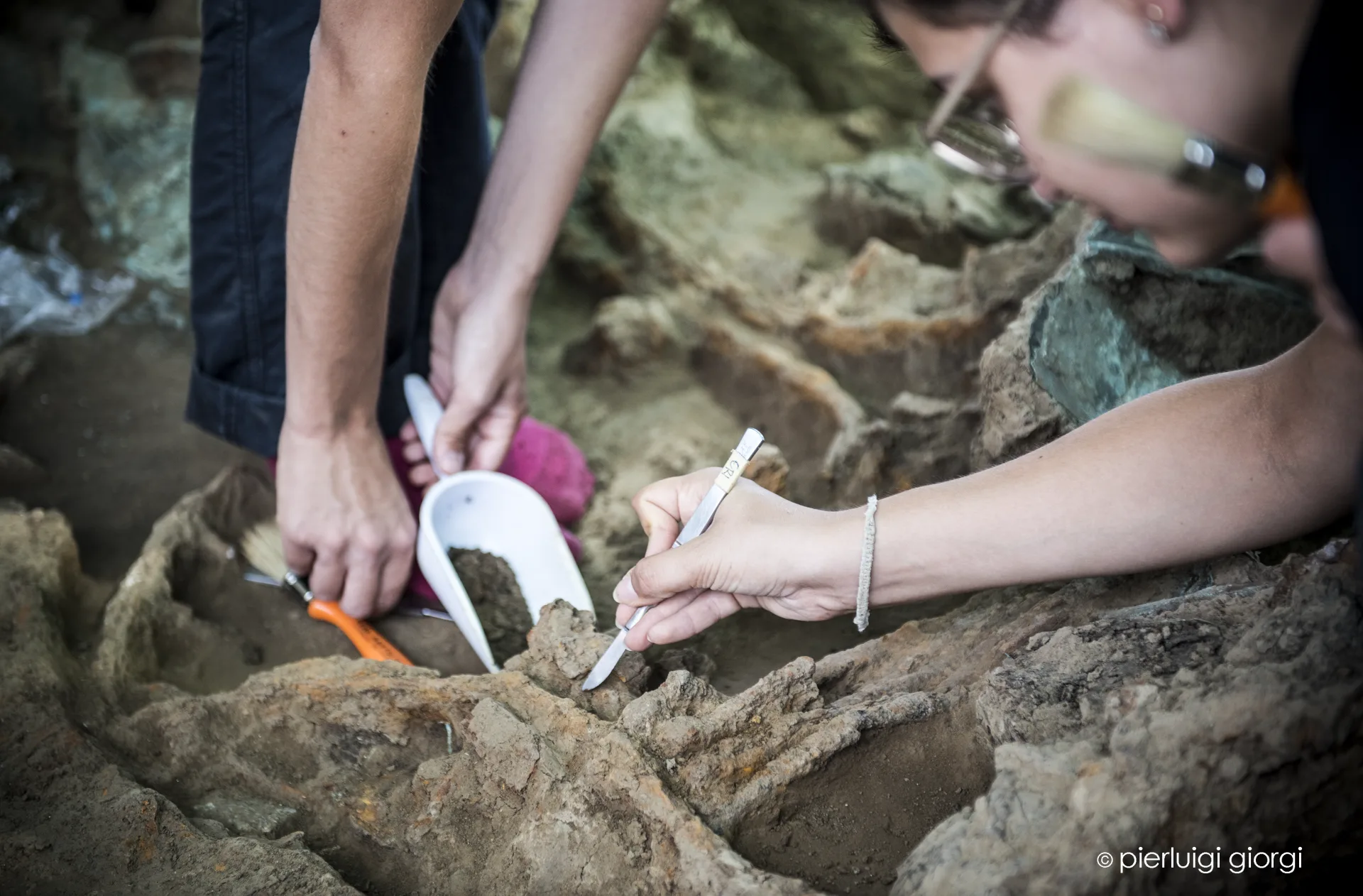
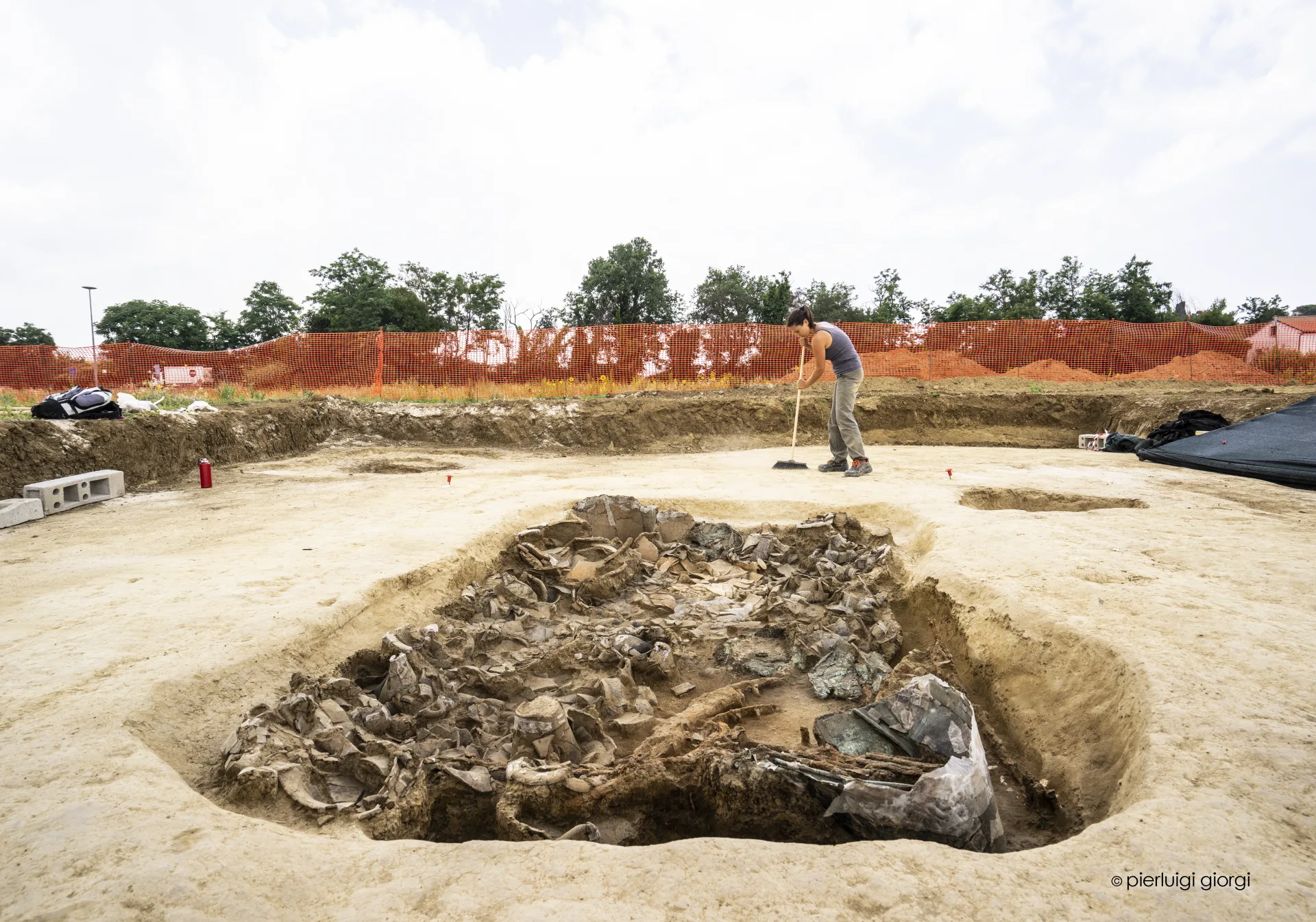
The excavation campaigns, which have continued every summer since 2018 with the involvement of students and specialists, have brought to light a funerary landscape of exceptional complexity. The four large funerary monuments, bounded by circular ditches, are attributed to the Picene culture of the 7th century B.C. Inside these monuments, burial pits filled with grave goods of inestimable value were discovered, reflecting the social status of the deceased to whom they belonged.
The first excavation campaign was the most sensational, featuring the discovery and excavation of the large tomb known as the “Tomb of the Prince of Corinaldo,” from whose burial pit nearly one hundred grave goods emerged, celebrating the deceased’s status as a political, military, and economic leader of the 7th century B.C. Subsequent campaigns focused on the excavation of other funerary monuments, all belonging to high-ranking figures, such as the female burial unearthed in 2021 (crucial for studying the role of women in the Picene aristocracy) and another princely tomb investigated in 2024.
Overlapping the monumental Picene necropolis, in a striking historical continuity, is a vast Roman-era burial ground containing approximately 90 burials investigated from 2017 to the present. The study of the area, the types of burials, and their arrangement serves as a fundamental starting point for reconstructing and analyzing the evolution of funeral rituals over time and the perception of this space’s sacredness through its use.
Restoration
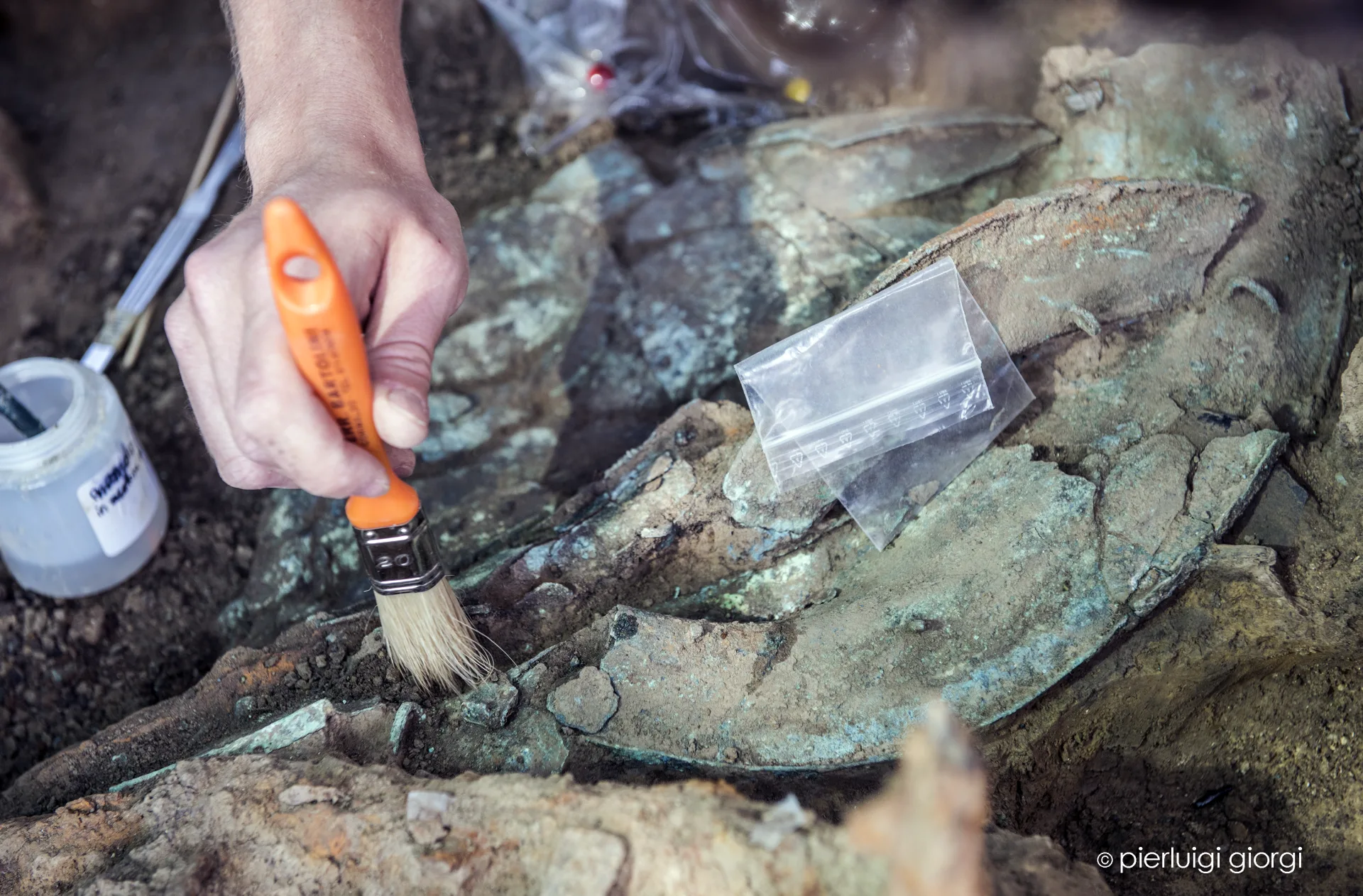
A distinctive feature of this project is the immediate integration of excavation and conservation work. Restoration is no longer the final phase of the discovery process, but becomes, from the very beginning, an integral and fundamental part of the research. The prestigious involvement of the Master’s Degree Program in Conservation and Restoration of Cultural Heritage at the University of Bologna (Ravenna campus) and the meticulous work of professionals such as Mirco Zaccaria and Paolo Gessani, in collaboration with the Restoration Laboratory of the A. Casagrande Civic Archaeological Museum in Castelleone di Suasa, have made it possible to work on extremely fragile artefacts immediately after their recovery. This joint effort between academia and specialised laboratories not only ensures the preservation of the materials but also provides archaeologists with valuable data for their research.
The Artefacts on Display
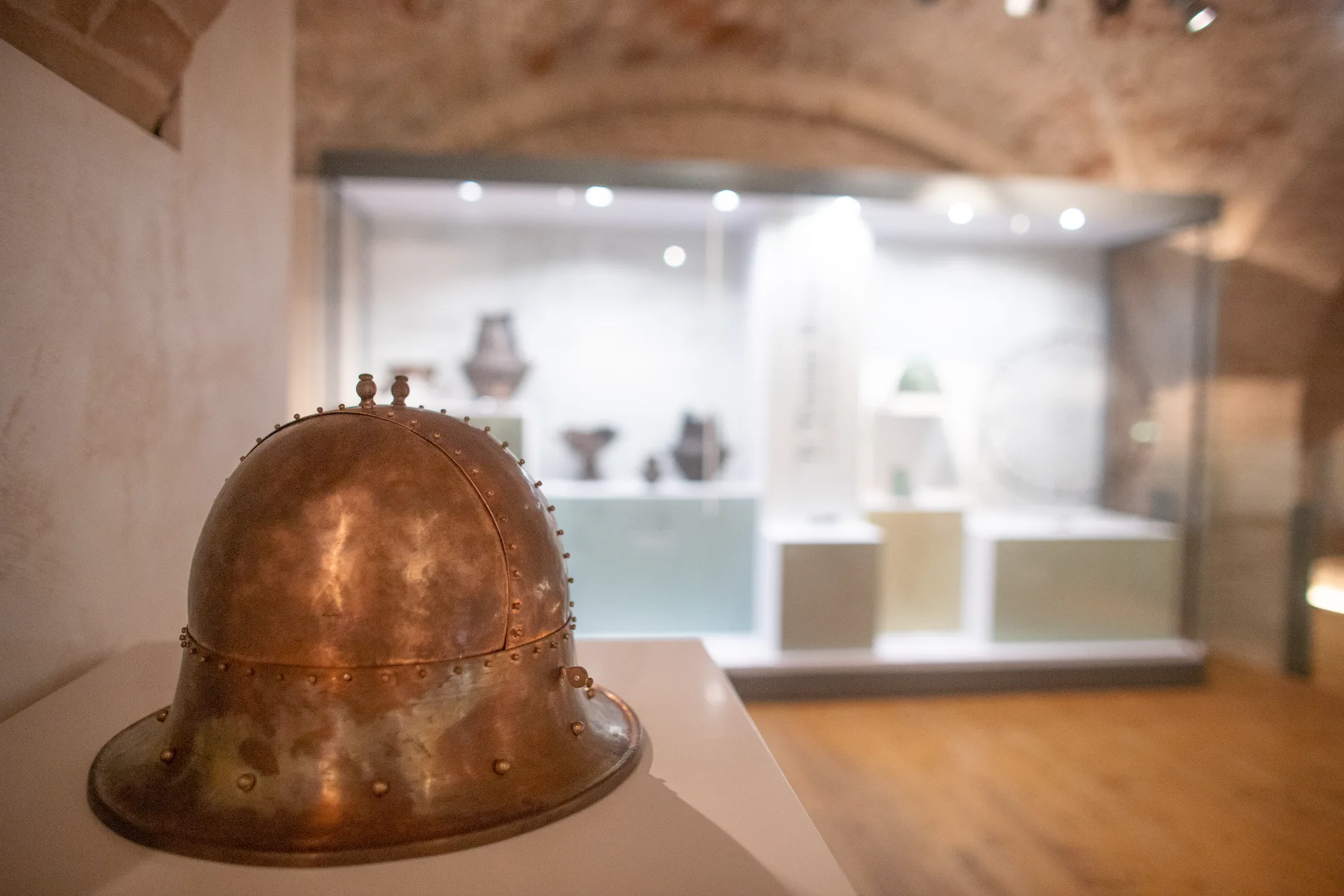
Although the archaeological site in the Nevola Valley is currently closed to the public to allow for ongoing investigations, the story of the discovery is on display at the “Claudio Ridolfi” Civic Art Collection in Corinaldo. Here, in a dedicated section, visitors can admire a selection of twelve artefacts unearthed during the first excavation campaign in 2018. The section titled “The Rediscovered Treasure. The Tomb of the Prince of Corinaldo,” curated by Federica Boschi and Ilaria Venanzoni, tells the public the fascinating story of research, discovery, study, and preservation that has characterised the project, presenting its results and the methodologies employed
The exhibition is made unique by the evocative photographs by Pierluigi Giorgi and the reconstructive drawings which, together with archival images, document the various stages of the discovery. These visual elements allow visitors to immerse themselves in the daily work of archaeologists, conservators, and technicians who, with dedication, have worked tirelessly to restore this extraordinary historical legacy to the community.
These twelve pieces best express the most representative ideological elements of the grave goods and their multiplicity of meanings: a helmet and a greave celebrate the dimension of political and military power; the chariot symbolises land ownership; the funeral banquet ceremony is represented by containers for holding and pouring food and drink; and the meat sacrifice—involving the cutting and cooking of consecrated animal meat—is evoked by the axe, the skewers, and the braziers.
Informazioni aggiuntive
IAT Office Corinaldo
Via del Corso 11
Tel. +39 071 797 8636
Mail: iat1@corinaldo.it
Need more information?